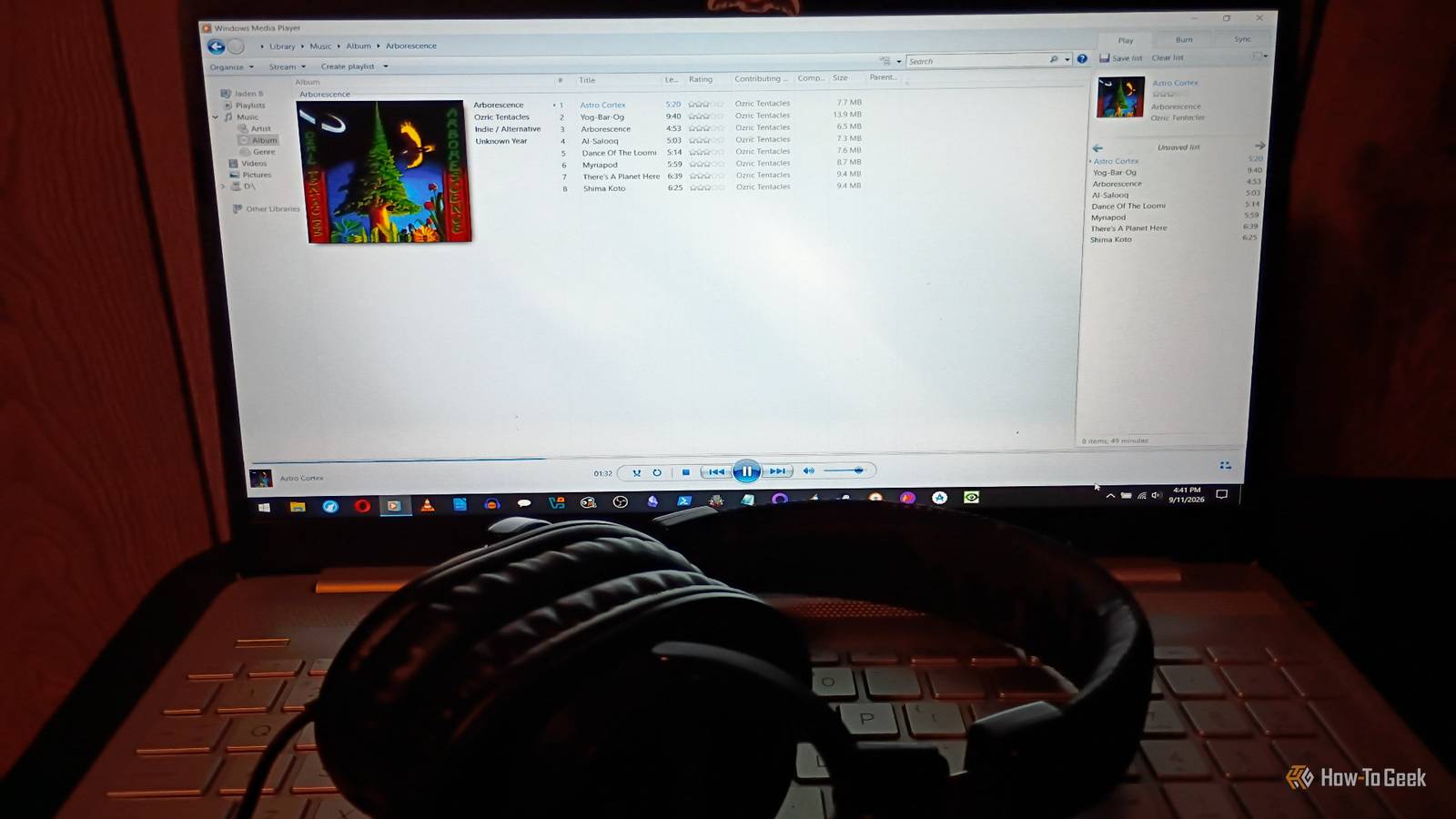
Windows Media Player (WMP) used to be the best. It didn’t quite whip the Llama’s behind, but I remember a time when it was fantastic. But, as these things tend to do, it got worse over time. Streaming came along, people shifted away from local media players, and Microsoft just shifted its focus elsewhere. Windows 11 replaced it with Media Player, but you can still access the legacy version of WMP. Better media players that could handle more formats appeared, and Microsoft kept breaking WMP features. WMP lost me completely last yearwhen I tried to rip a brand-new CD I bought and discovered the database that used to pull metadata no longer worked (the CD in question was Richard Thompson’s The Old Kit Bag, if you’re curious). Fortunately, there are a bunch of fantastic open-source alternatives. Here are some of my favorites.
A must-have media player for any operating system
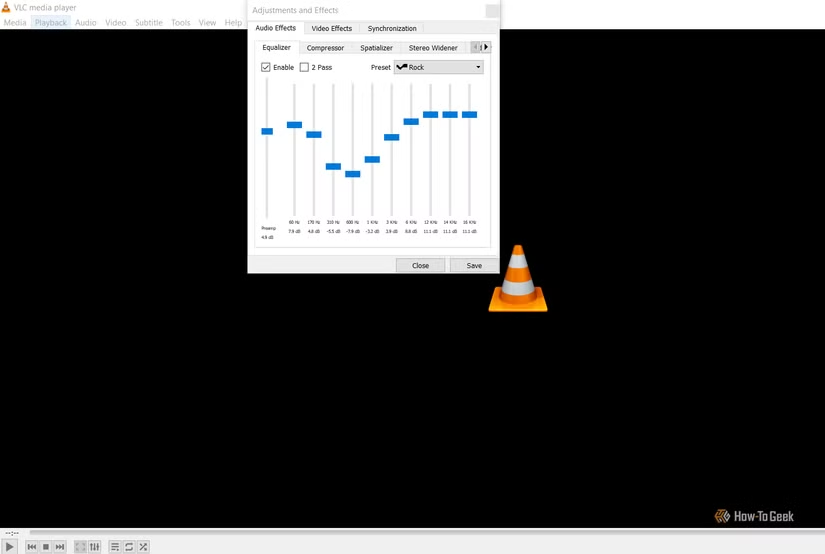
I enjoy testing and messing around with different music players. I use mpd & ncmpcpp on my home lab Android phone because I like the retro visualizer and audio quality. For Android Auto, my go-to player is Symfonium. On Linux, I’m really digging Clementine at the moment. But I also have VLC media player installed on all three platforms I use. VLC uses the LibVLC engine, which is why it’s so powerful.
But you just can’t argue with how amazing VLC media player is at just about everything. It handles FLAC files with no problem, the visualizations rock, I can open streams (from my phone, if I want!), it handles Ogg Vorbis, there’s an equalizer, visualizers, you can convert media files to different formats, and so much more.
VLC is wonderful for audio, but it is great for video, too. I can also watch shows in MKV format natively, so that’s definitely a selling point for me. It’s a killer app and one of the best open-source media players I’ve ever used, hands down. But I like some variety, and another open-source app gives VLC a run for its money.
MPV
A fantastic, free, and open-source media player
As much as I like VLC, you can’t go wrong with MPV. It’s cross-platform as well, so I tend to install it on every OS I use. This thing is lightweight. When I’m using MPV while working on a lot of different things at once, it doesn’t usually get bogged down. I don’t think it’s ever crashed while playing albums.
MPV uses one of the greatest backends for video, too: FFmpeg (technically it uses FFmpeg/libmpv).
I like the audio playback in MPV, but video is where it really shines. Old DVD videos look fantastic here. MPV has advanced video scaling you can use to fine-tune your settings without plugins or extensive tweaking. It just works.
I can change the aspect ratio to 2.35:1 (back when I was a projectionist, we used to call that SCOPE), stretch it to fill the screen (and it still looks good), and fill the screen or use deband/de-interlace if you want to. VLC has more aspect ratio options, but it’s easier (in my experience) to narrow down these settings using MPV.
I love the ability to customize key bindings and had a fun time messing with the different settings. There’s also a collection of user scripts you can try with MPV.
I could see using this app for video on Windows pretty often in the future. MPV had no problem playing any of the MP3, FLAC, OGG VORBIS, and MKV files I threw at it. I also got it to open a YouTube link, which was a nice bonus.
A fantastic media player just for Windows
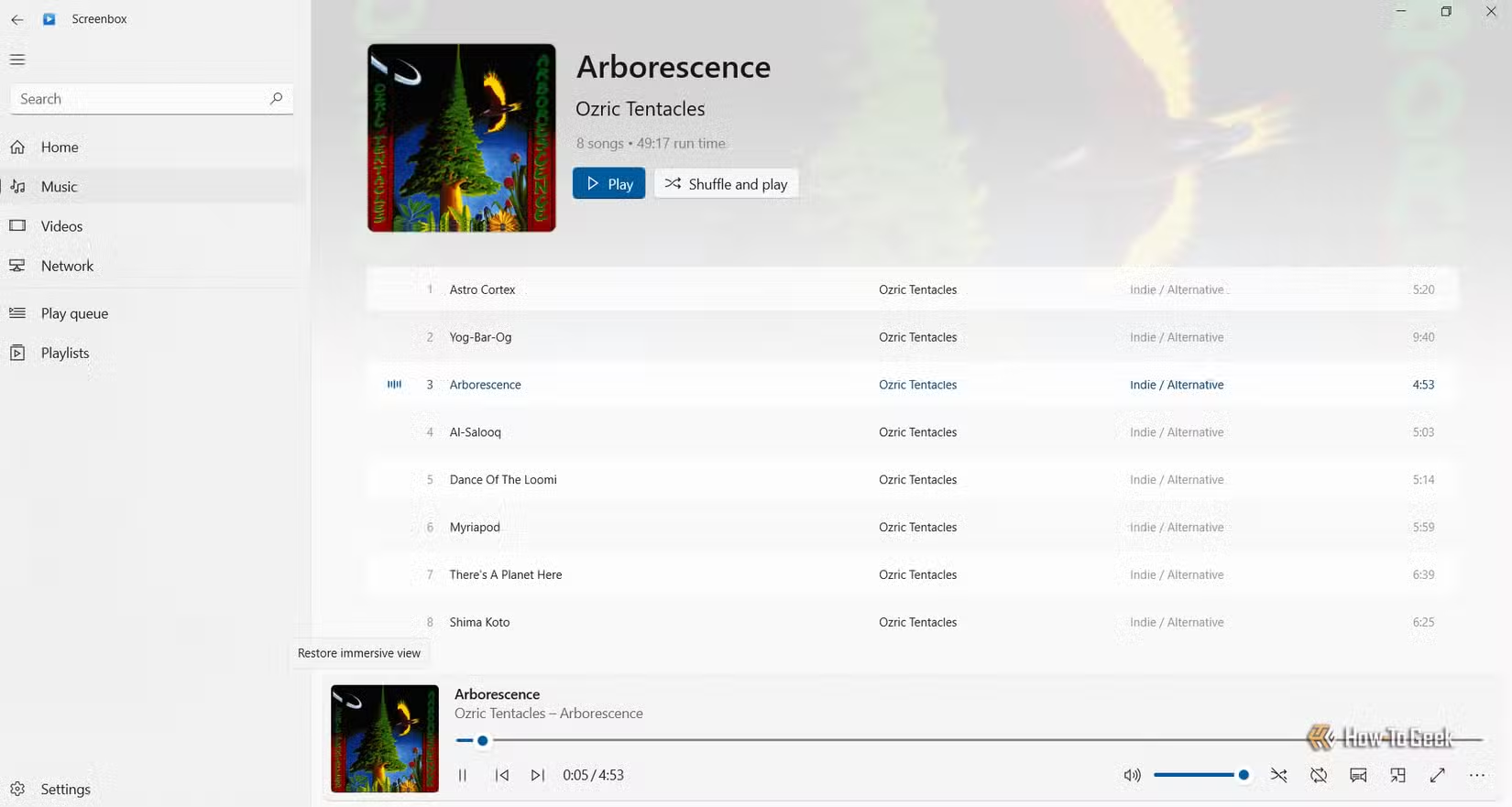
Screenbox is a good, open-source alternative as well. You can get it from the Microsoft Store if you want to give it a go. The app was built natively for Windows. It looks good, plays back files without issue, and works for audio and video.
It certainly feels like a Windows app. It has gesture controls, apparently (I don’t have a touchscreen on my Windows PC, so I can’t test them), and if you know your YouTube hotkeys, they’ll work well in the app. On the downside, I noticed it didn’t have an equalizer. Video playback was fine, but I’d prefer more options.
You get plenty of audio options (repeat, playlists, playback speed, casting), and out of all the open-source apps I tried, it feels the most like Windows Media Player Classic. I could use it for quick background listening while I’m working with other apps that use a lot of resources. It’s a fun little program for Windows that I quite enjoyed using.
Open-source media players are fantastic alternatives to Microsoft’s apps
And there you have it: three of the best open-source Windows Media Player alternatives I’ve had the pleasure of using. I’m always trying new apps and media players (on Windows, Linux, and Android). For now, I’m definitely going to test MPV a bit more and spend a bit more time with Screenbox when I’m working in my home lab (on Windows).