
Foldable phones are expensive, so I get why you would be nervous about breaking their flexible internal screen — especially after the horror stories that plagued the first-generation models. But as someone who has used folding phones for the past couple of years, I can tell you firsthand that those screens are more durable than you think.
The iPhone Duo may be Apple’s first folding phone, but the technology is hardly new. Foldable phones have been around for the better part of a decade, and companies have figured out not only how to make them, but how to make them well.
Flexible screens may be delicate, but they aren’t fragile
Mine have held up better than the glass on the cover screens
Folding phones have two screens — an outer screen that’s made of the same glass as any other smartphone, and an inner screen made of a flexible plastic OLED. The latter has many layers and is protected by a pre-installed screen protector. Your safest bet is to keep this in place as recommended, but your screen can survive removing it — I replaced the protector on a prior phone of mine with a matte alternative.
Initial foldables suffered the occasional crack along the hinge on the inner display or were sensitive enough to be damaged by a fingernail while unfolding the phone. These stories still persist in the consciousness of those who remember the early days. You also still see the occasional post on Reddit from someone who has unfolded their phone to a nasty surprise. This may even have happened to you. Accidents and defects happen.
The thing is, these incidents have always been the exception to the rule, and the likelihood of them happening has gone drastically down. I’m willing to wager that more people with traditional slab phones have cracked screens than foldable phone owners have damaged inner displays. It’s a similar phenomenon to people worrying about EVs catching fire whenever a new story makes the news, even though internal combustion cars still catch fire at a higher rate.
Glass is glass, and glass breaks
I’ve scratched more slab phones than folding ones
I have switched between a surprising number of foldables in the past couple of years. I started with a Samsung Galaxy Z Fold 5 (it’s the phone I first paired with AR glasses) but sold that for a Galaxy Z Fold 6. I then traded the latter in for a Motorola Razr Fold.
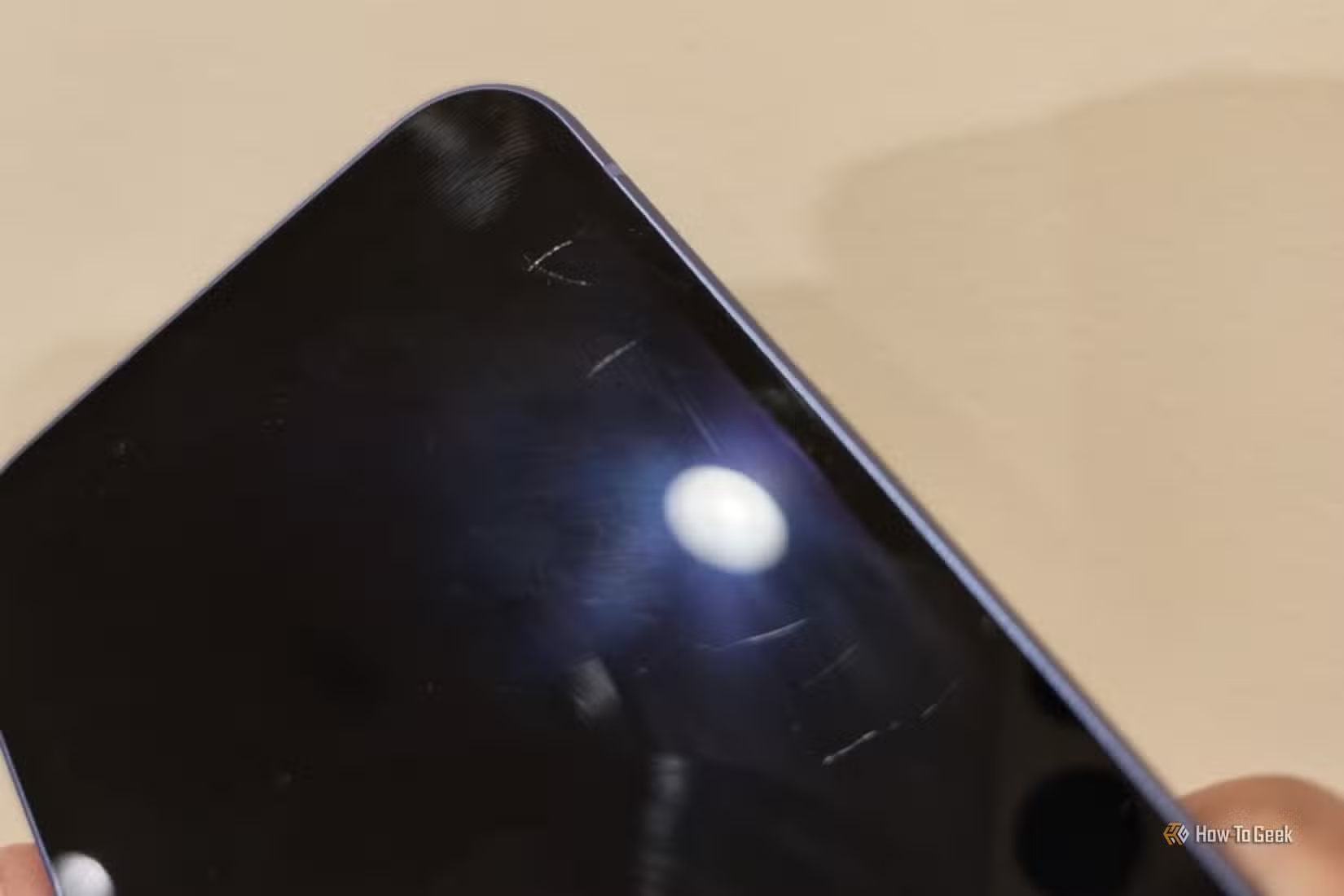
When I sold the Z Fold 5, it was no longer in perfect condition, but it was the outer display, not the inner one, that was scratched. That was my bad — I believed the marketing that these Gorilla Glass screens were strong enough, so I didn’t apply a screen protector. Lesson learned.
When I traded in the Z Fold 6, it was in near-mint condition. My Razr Fold also looks nearly brand new after several months of use. I applied a screen protector to the cover displays of both of these last two phones, but that’s the extent of the protection I’ve offered them. I continue to prefer to use my phones naked and don’t put them in a case. I agree with my colleague Sidney Butler when he argues that phone cases have become unnecessary. The worst that happened to me is that I had to replace the internal screen protector, which I paid UBreakIFix to do for around $20.
While the internal screens on all of my foldables still look largely as good as new, I’ve scratched the screen of nearly every slab phone that I’ve spent even a little bit of time with during the same period. The Google Pixel 10a I reviewed? There’s a scratch toward the bottom. I bought a Galaxy S24 FE for work, and that’s scratched too. The Murena Fairphone 6 I loved enough to take a short break from folding phones? That screen was also easily scratched (but at least it’s easy to replace). From my experience, whether a screen gets damaged or not has everything to do with whether I apply a screen protector, not whether it folds.
Treat a folding screen the same way you would a regular one
Keep it far away from keys
I am particularly careful with my phones. I rarely drop them, and I’m mindful of where I put them down, so it’s easy to write off my experience. The thing is, I’m not the only one in my personal life carrying around a foldable. My spouse uses a Z Fold 5, and they are far from gentle with their devices. Like every other phone they buy, it went straight into the biggest case available. It has since been dropped several times a week onto surfaces ranging from hardwood and tile to pavement. The inner frame, not the screen, is the other part of the phone that has been damaged, and I suspect it’s this specific case that did the damage.
My brother-in-law carries around a Z Fold 6. He decided to buy one after I showed him just how good foldable phones are for reading digital comics, and following my advice, he bought his second-hand. I don’t live with him to see how often it gets dropped, but it’s also in a case, and it’s still going strong.
The internal screens of foldables tend to hold up in large part because when they aren’t in use, they’re protected by the phone itself. They’re not scraping up against objects in your pocket or bag. As long as you fold them before putting them down, as most of us do, your inner screen is likely to hold up better than the outer one.
There is one catch, though: how well they hold up to dust and grime. Most foldables are more vulnerable to sand than slab phones, with the possibility of a grain slipping past the hinge and getting lodged behind the screen. I don’t frequent sandy places, but if you do, you’ll want to seek out a foldable with an IP6 rating, which in the US means a Google Pixel 11 Pro Fold or the iPhone Duo.
Don’t let screen anxiety be what stops you from buying a foldable
There are other reasons not to buy one. Cost is the biggest barrier, with even second-hand prices being more than many can stomach. Size and weight are still a valid issue with some models, particularly Google’s.
Yet while a foldable phone can break, and more moving parts mean there are more ways to do all — that doesn’t mean you’re more likely to damage it than any other phone. That said, I still purchase the protection plan. Better safe than sorry.