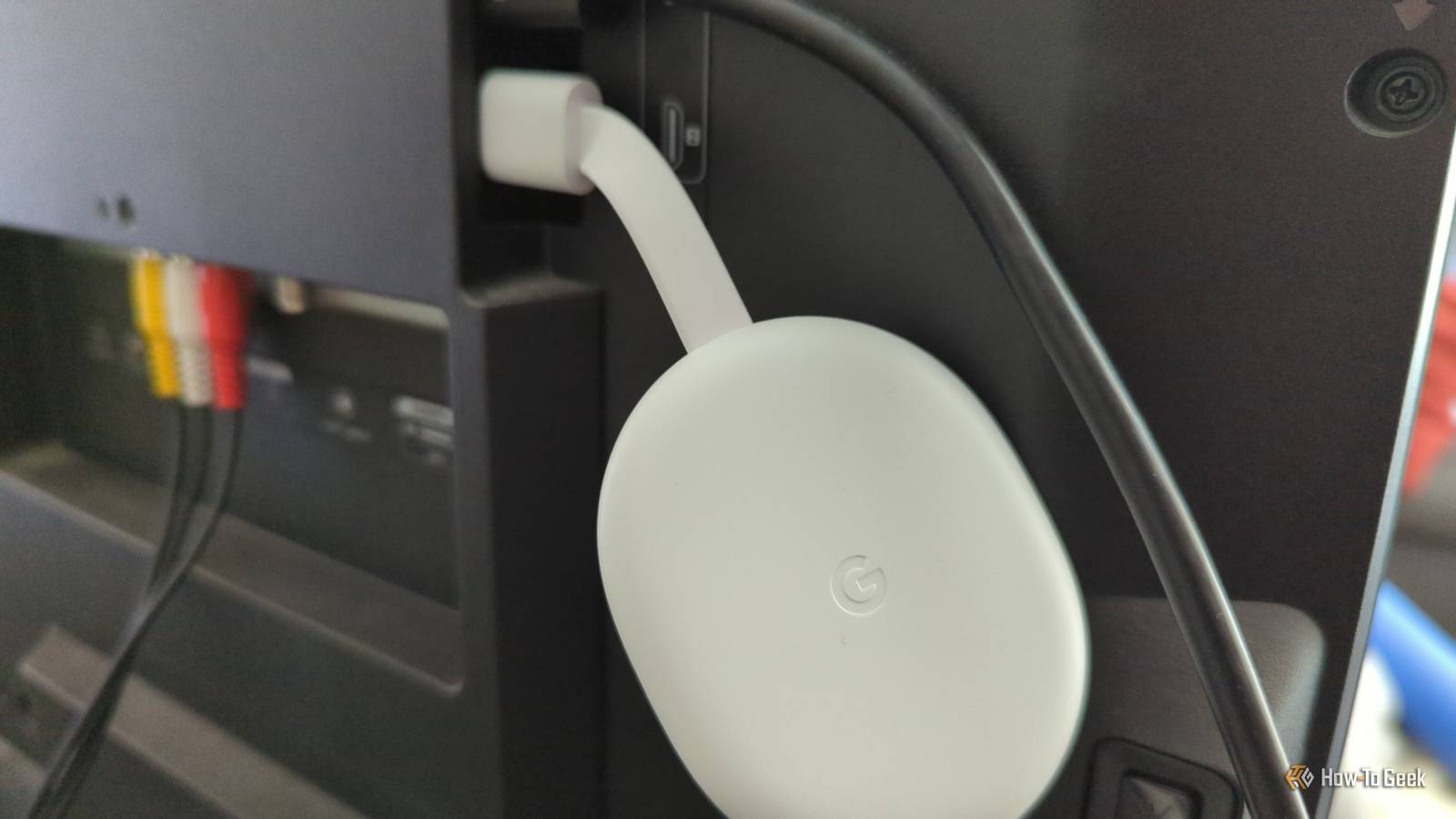
I still value my Google Chromecast with Google TV dongle because I don’t mind when it slows down a little, since I only use it on an older TV to stream movies and shows. So when I ran into a visual problem and thought my dongle was dead, I found it just needed a quick settings adjustment to come back to life. Some have claimed their dongle received an update that broke their Google TV stick, but mine still worked until one day it showed that lovely black screen of death on an old TV that replaced my dead one. Sometimes it’s just one setting that causes the black screen; other times, it’s more complex.
If it’s dead, why would I care?
It boils down to preferences, needs, and appreciation
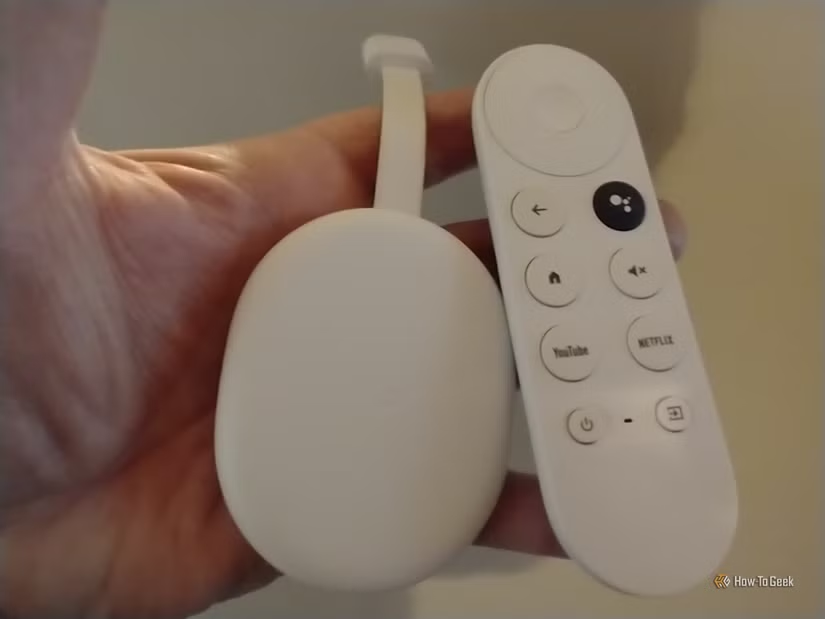
The Google Chromecast + Google TV stick/dongle was revolutionary for its time, bringing a Google TV experience to the Chromecast that once mirrored your Android smartphone. Aside from the handy remote with side volume controls and hot buttons for YouTube and Netflix, the dongle’s small form factor made it hard to pack so much power into the device, including 4K resolution and versatile streaming functionality.
Today, the Google TV stick still has a place for many people, which is probably why third-party sellers list it at $150. People still love the hide-behind concept, and many don’t have room for a space-consuming, console-like device (Google TV Streamer) on their TV stands or in their entertainment centers. I don’t mind if my Google TV stick becomes slow at times. I just need a device to watch streaming content on an old Hitachi 1080p TV.
This simple setting solved my black screen issue
Sometimes, simple changes make effective solutions to a problem
My old Philips 1080p TV crapped out, so I replaced it with another old TV I had in storage: a Hitachi 1080p TV. To my surprise, I experienced a black screen with no response, but the audio still worked, ironically. I thought something happened to my Google TV fire dongle and assumed it was dead. Perhaps the old Hitachi TV’s HDMI input shorted it out somehow? No, it didn’t. Maybe the Chromecast lost a board connection during the transition. No, that didn’t happen either.
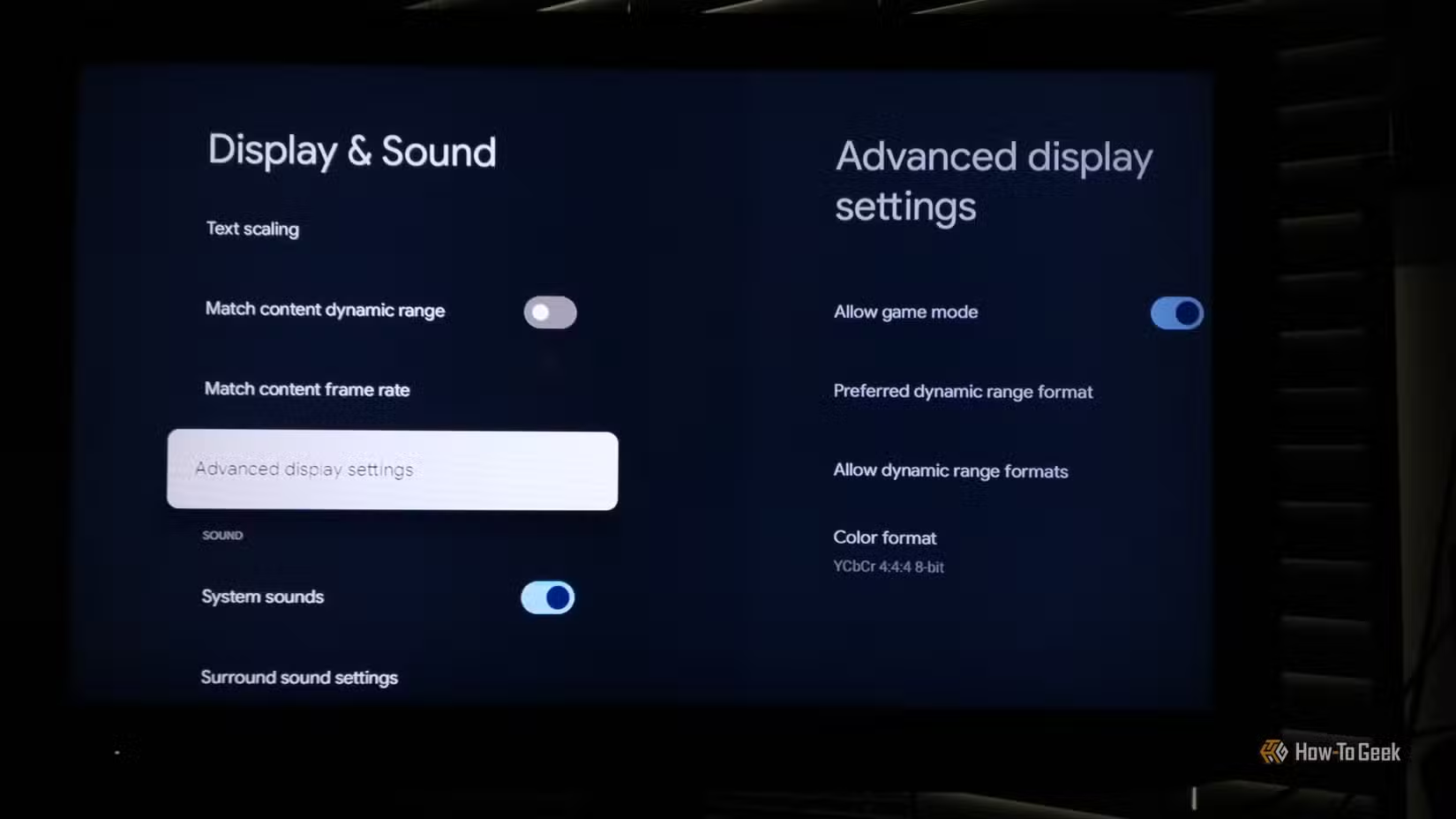
I tried the dongle on the newer Philips Google+ TV in the living room and, to my relief, it worked just fine. I discovered that the HDMI/HDCP handshake between the old Hitachi TV and my Chromecast with Google TV dongle wasn’t succeeding. I pulled the dongle from the old TV and plugged it back into the Google TV in the living room. Then I went to Settings -> Display & Sound and turned “Match content dynamic range” off. I left “Resolution” set to “Automatic,” figuring I could change it to 1080p only if needed, but when I reinserted the dongle into the old Hitachi TV, it worked.
I ran the Google TV stick for an hour, testing it with various streaming apps, and it remained functional. Sometimes, certain apps can cause a black screen and require an update, but that wasn’t the case for me. Netflix and YouTube worked fine, and Disney+, Amazon Prime Video, Tubi, and Pluto TV were now running great.
A black screen can be a more complex problem
Several issues can cause your Google TV stick to be in the dark
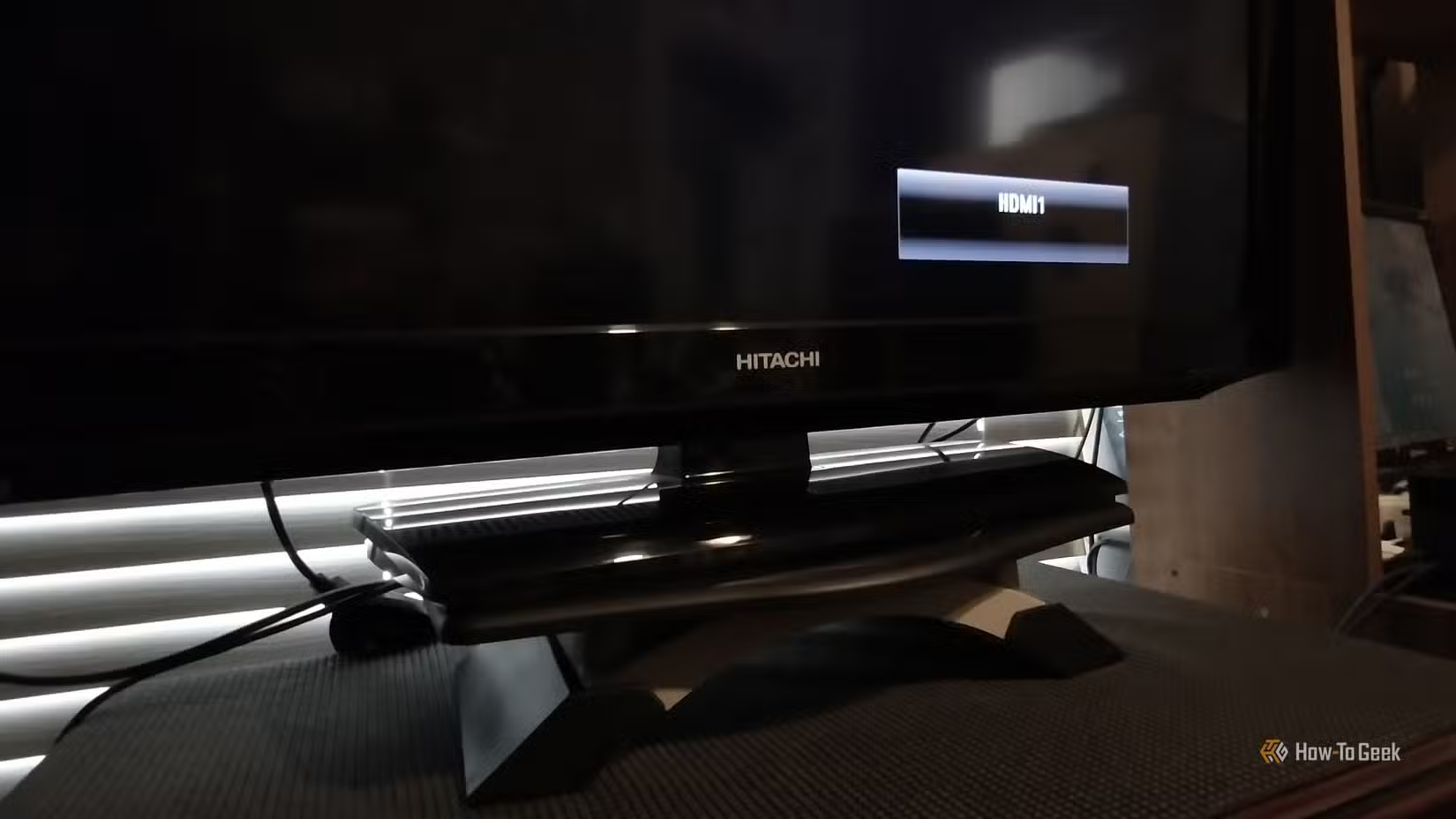
HDMI/HDCP handshakes between devices can be difficult scenarios, but my situation was a simple settings fix. If you experience a black screen, it could be the way a specific HDMI input handles video. Some TVs have different HDMI inputs with various features or functionality, such as 4K with HDCP vs. 4K with eARC. Disabling HDMI CEC can also fix it, but my case involved HDR.
To use HDR, both the display and the device must support it — my TV did not, but the one in the living room did, just like most modern TVs packed with features. 4K can easily get confused with HDR, but they are two different animals. HDR relates to brightness in colors, color depth, and darkness control, while 4K represents the actual pixel count on the screen.
Another simple but common issue is using a soundbar with your TV to enhance the audio experience. Sometimes, the TV switches to a new HDMI input if CEC is enabled and it detects the soundbar — you’ll see a black screen.
Power issues can also cause a black screen, even if it’s random. Many people try plugging the USB-C power cable into their TV, but most TVs can’t provide enough power to run the device properly. Some TVs also have a “service only” USB port that certainly cannot power the Chromecast with Google TV dongle. To run properly, the power must be 5V and 1.5A to 2A.
Sometimes, a simple setting can be your biggest problem
When I got the black screen on my Chromecast with Google TV stick/dongle, I thought it was done for. Yeah, I could have replaced it with the newer Google TV Streamer packed with features and called it a day, but I didn’t require anything new to serve the purpose I needed. After all, it was an old Hitachi HDTV without all those newer bells and whistles.
Even though HDR was my issue, you may experience a different problem, which may be solved by a different setting or a combination of several. A great way to make sure your Google TV device isn’t dead is to turn off CEC, eARC, HDR, and similar settings on your TV, then try again and see what happens. Of course, you can also try a hard reset to ensure your streamer starts fresh without hiccups, or upgrade to the Google TV Streamer.