Your NAS is, at its core, kind of another PC. It has PC specs, and it runs a full operating system, but the way it’s put together means it’s optimized to do certain things betther than your PC.
That also means that you can just throw a PC OS into your NAS. And Ubuntu might be a great fit. Here’s why.
It can do everything a NAS OS can
Run local services, manage storage pools, and more
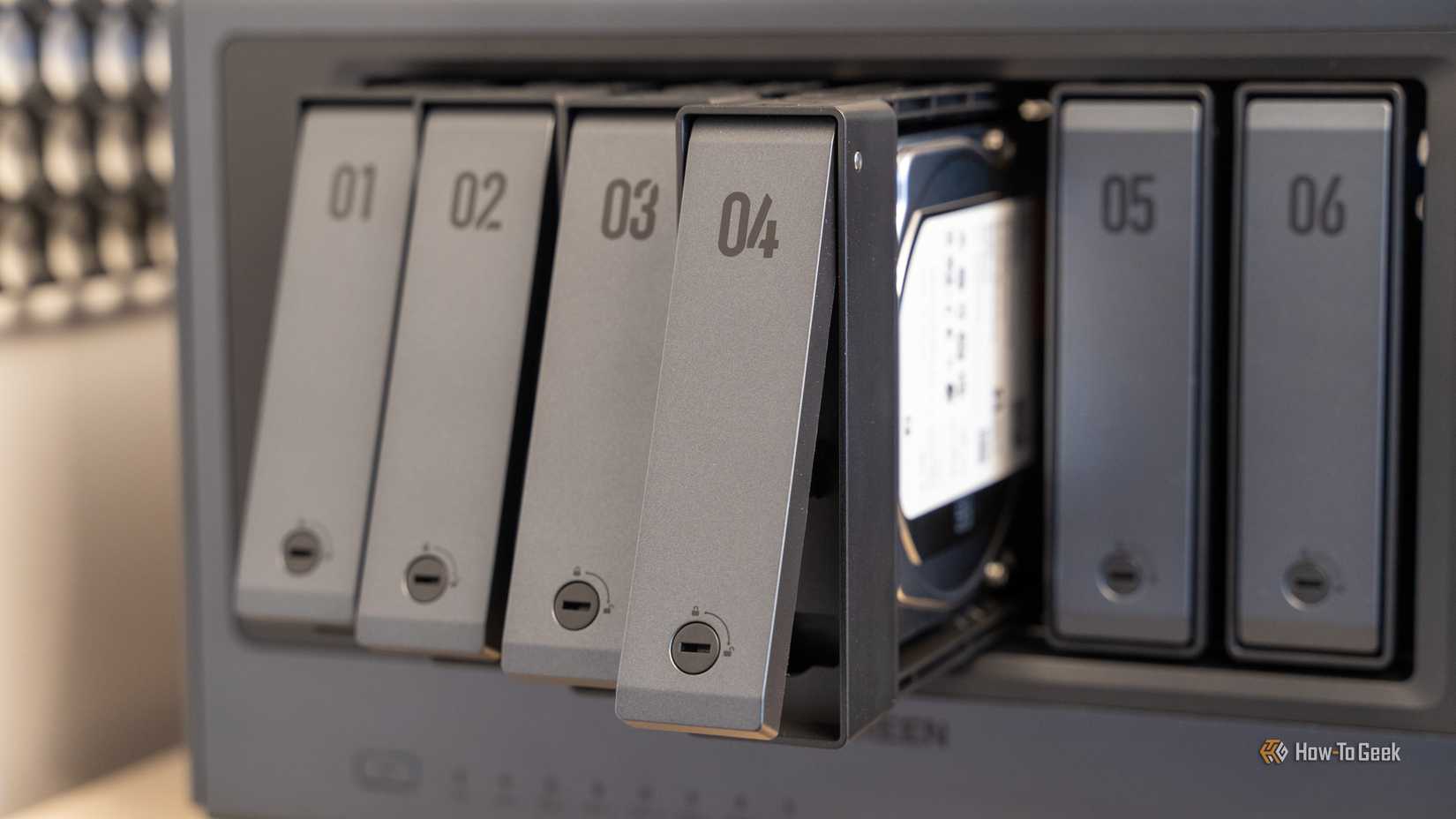
Straight off the bat, the fact is that Ubuntu is actually fully capable of replicating every core function of a dedicated NAS OS, often using the exact same underlying technologies. That’s not an advantage—we’ll get into the advantages in a bit—but it’s an assurance that at the very least, it doesn’t really have any downsides.
At the heart of any NAS is the ability to manage storage pools and share files across a network, and Ubuntu handles these tasks with enterprise-grade reliability. The OS supports the industry-standard SMB protocol through the Samba suite, allowing seamless file sharing with Windows, macOS, and Linux clients just as effectively as a pre-built Synology or QNAP unit.
Ubuntu also provides native support for advanced file systems and volume managers that are the envy of many consumer-grade NAS solutions. You can deploy ZFS on Linux to achieve snapshot capabilities, data scrubbing, and protection against bit rot, or utilize Btrfs for flexible drive pooling. For those preferring traditional redundancy, the mdadm utility allows for the creation of robust software RAID arrays (RAID 5, RAID 6, or RAID 10) that are portable and widely documented.
Administrators can install lightweight management interfaces like Cockpit, which provides a clean, web-based dashboard for monitoring system health, managing storage, and reviewing logs. Once the initial setup is complete, the day-to-day management experience of an Ubuntu-based NAS can actually even be visually similar to a dedicated appliance.
It’s way more flexible
No limitations
Of course, I wouldn’t be touting it as a better alternative if it didn’t have advantages. The primary advantage of choosing a general-purpose Linux distribution like Ubuntu over a dedicated NAS OS is perhaps the sheer freedom it affords the administrator.
Dedicated NAS software often imposes artificial limitations or rigid structures to ensure stability for the average user. For instance, many appliance operating systems require drives to be added in specific configurations or force the use of a single file system. Ubuntu removes these guardrails, allowing you to architect a storage solution that fits your exact hardware and performance requirements. You are free to mix file systems, combine different drive sizes using tools like MergerFS, or implement tiered caching strategies that might be unsupported on a restrictive appliance OS.
Hardware compatibility is another area where Ubuntu shines. Because it is one of the most widely used Linux distributions in the world, it also enjoys the broadest driver support from hardware manufacturers. Dedicated NAS OSes sometimes lag behind in kernel updates, meaning they may not support the latest network interface cards, NVMe drives, or processor architectures immediately upon release. With Ubuntu, you have access to newer kernels and a vast repository of drivers, ensuring that you can utilize the latest high-speed 10GbE or 25GbE networking gear without waiting for a vendor to release a specific patch.
You are also not beholden to a vendor’s firmware release schedule or end-of-life policies that might render a perfectly good storage server obsolete. You have total control over when updates are applied, which packages are installed, and how the system resources are allocated.
It can be more than just a NAS if you want
And with far less effort
Finally, while storage is your NAS’s main mission in life, you can also make it wear multiple hats. Ubuntu excels here because it treats the machine as a full-fledged server rather than just a storage appliance. While dedicated NAS software often supports plugins or “apps” running in containers, these implementations can be clunky, limited in scope, or slow to receive updates. Ubuntu, on the other hand, provides a native environment for running virtually any software compatible with Linux, turning your storage box into a VM, a media center, or a development platform. Pretty cool.
For example, running a media server like Plex or Jellyfin on Ubuntu allows for direct hardware access, making it significantly easier to configure hardware transcoding using Intel QuickSync or NVIDIA GPUs compared to the often convoluted passthrough settings required by specialized NAS OSes.
Ubuntu is also the de facto standard for Docker containerization. This means you can easily spin up a robust home automation server using Home Assistant, a network-wide ad blocker like Pi-hole, or a personal cloud using Nextcloud, all while your data resides locally on the same high-speed storage fabric.
The possibilities are endless with Ubuntu
The capability to run KVMs via QEMU transforms the device into a Type-1 hypervisor. You can run Windows or other Linux distributions in virtualized environments alongside your storage services, consolidating multiple physical machines into one. This is particularly useful for those developers who need a sandbox environment or for running legacy applications that require a specific operating system. Because Ubuntu is a standard development target, you also gain the ability to compile code, run database servers like PostgreSQL natively, or host complex web applications without the overhead or restrictions of a translation layer. Essentially, your NAS becomes the central nervous system of your digital infrastructure, capable of adapting to new roles as your needs evolve.
Ubuntu might just be a great fit for your NAS, but of course, you should always do your own research.