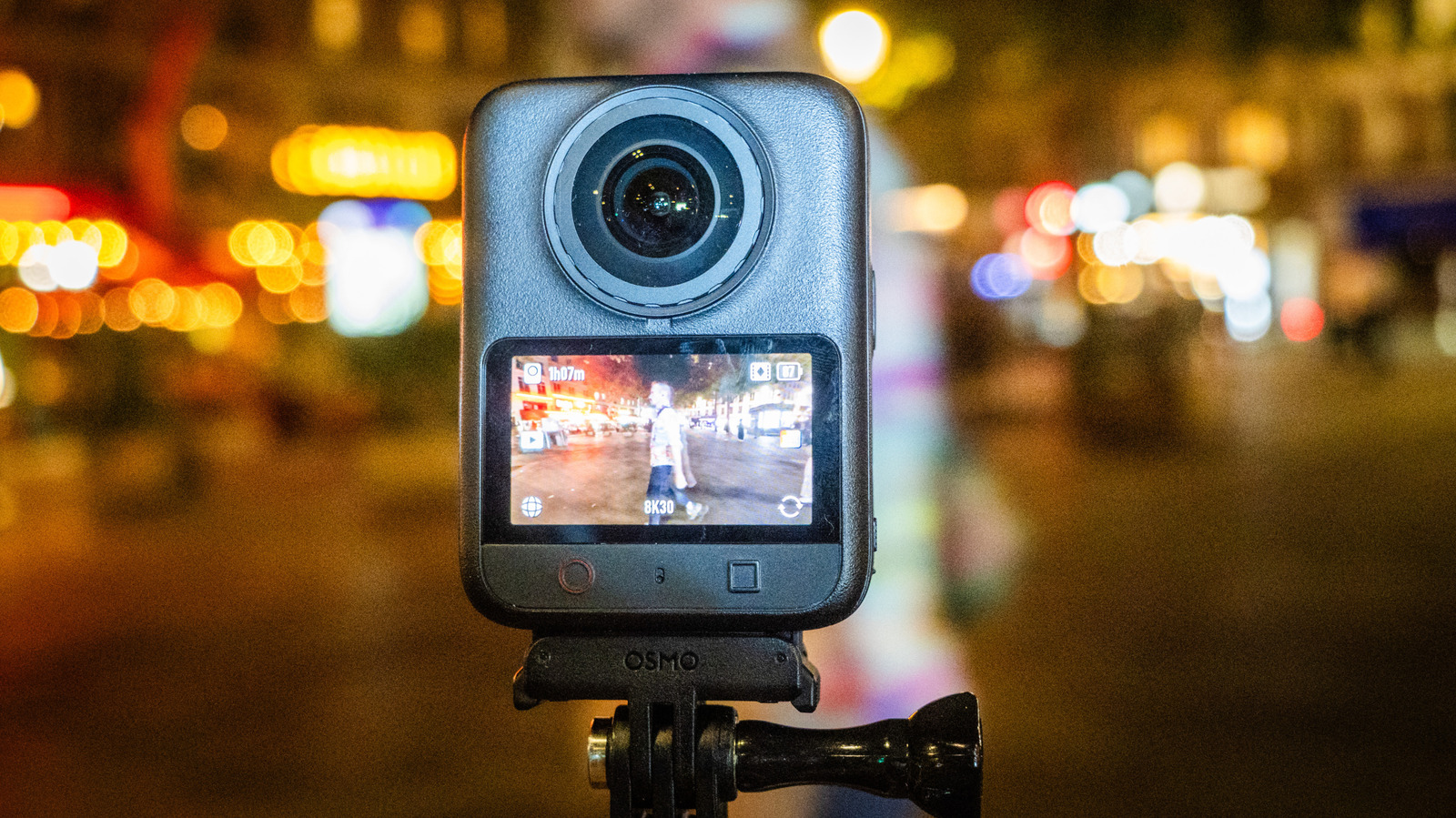
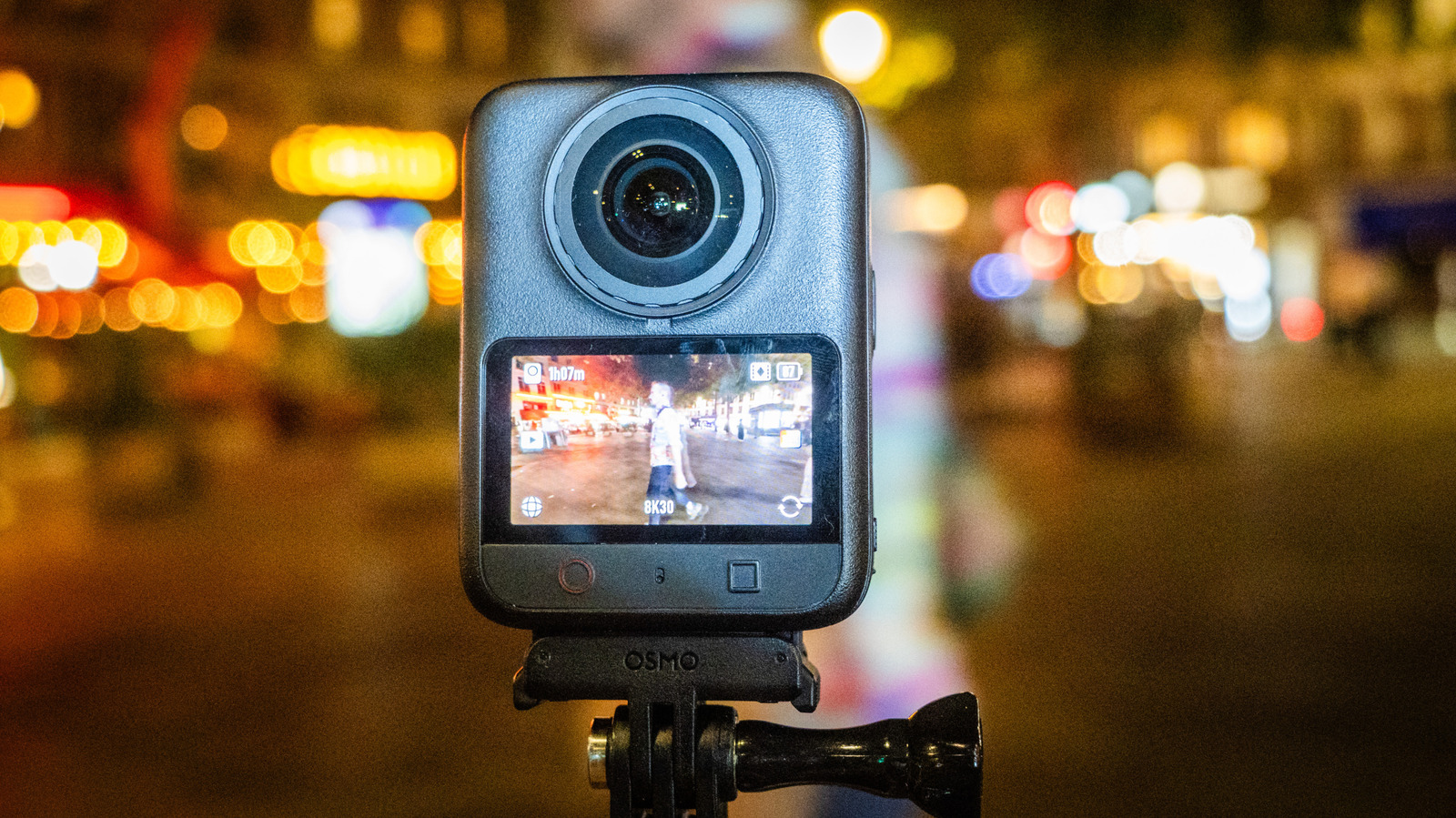
A key feature of the Osmo 360 II carried from the first model is the 1/1.1-inch square sensor designed for panoramic shooting. It allows DJI to use 25 percent more of the sensor than some rival models, though Insta360’s X6 now uses the same-sized sensor. DJI also updated the Osmo 360 II’s processor to increase video speeds, improve low light capability and boost dynamic range.
With the update, the camera can now record 8K 360 video at up to 60 fps instead of 50 fps, and 4K at 120 fps, up from 100 fps. As before, it supports 10-bit D-LogM and HDR capture in HLG mode, but not Dolby Vision like the Insta360 X6. DJI says it boosted dynamic range from 13.5 to 14.5 stops as well. A new AI noise-reduction algorithm called SuperNight 2.0 is designed to allow higher ISO settings, and thus higher shutter speeds at night to reduce motion blur. It even has a dedicated setting under the “Stabilization Scenarios” menu setting called “Anti-motion Blur.”
To confirm those claims, I tested the Osmo 360 II in a couple of different scenarios. One was a bike ride on a sunny day to see if I could tease out more shadow and bright light detail. In another, I tested it on Paris streets at night, mounted directly to the bike’s handlebars to test RockSteady 3.0 stabilization with pavement vibration. I used both the regular video mode and SuperNight 2.0 (with and without Anti-motion Blur) to see the difference.
The results were impressive. In daylight, the extra dynamic range was noticeable, with more detail available in both shadows and highlights. That extra latitude allowed me to output vibrant, punchy video and do some creative color correction as well. DJI’s cameras have always produced color-accurate video, and that was also on display here with human subjects, vegetation and cityscapes.
At night, the SuperNight 2 setting did improve motion blur issues by boosting shutter speeds slightly, while also eliminating much of the “plastic” effect on people caused by the previous model’s aggressive AI noise reduction. I found the optimal balance between image quality and stabilization using SuperNight 2.0 with the Anti-Motion Blur scenario. While some artifacts were present at that setting, it wasn’t distracting and allowed for a bright exposure.
I also tried it at night in panoramic mode. I set exposure to “manual” with a high ISO setting, reasonably high 1/160th shutter speed and the “anti-flicker” setting enabled to reduce artificial light strobing. This worked best to eliminate motion blur caused by the stabilization, and allowed me to apply noise reduction later in post for good results, though footage was darker than when using SuperNight 2.0. Overall, the Osmo 360 II produced some of the best low-light video I’ve seen on any action cam.
As before, image quality suffers in one key area. Even with 8K 360 resolution, the Osmo 360 is clearly less sharp than DJI’s Action 6 Pro after conversion to 4K flat video. After testing it with resolution charts, I’d rate it as somewhere between 1080p and 4K in the center, and around 720p at the edges.
Stitching can still be a problem too, with some artifacts present at certain angles, but fewer than I’ve seen with the Insta360 X6. This confirms to me that the attraction of the Osmo 360 II is the ability to switch angles, and not the overall video quality.
The Osmo 360 II offers a few other features, including the new 16K Timelapse feature (up from 8K before) and subject tracking at up to 4K 30 fps. There’s also a “Vortex” mode that works at 8K 120fps, giving you a trippy (but not very useful) barrel roll effect.
The audio system is the same as before, with four internal mics to capture ambient sound and in-camera wind reduction that I found effective for bike rides. It can also connect automatically to DJI’s latest mics, including the Mic 3, Mic 2, Mic Mini 2S, Mic Mini 2 and Mic Mini. Those allow for clear, realistic voice audio and can also record internally to provide a backup. Both Insta360 and GoPro now offer their own wireless mic systems now, too.