
With so many Linux distros out there, how do you know you’re using the right one? Choosing a Linux distro is easy when you have to solve real problems, not made-up ones. Here’s what you should focus on instead of what’s trendy.
You’re fighting to get it working on your machine
Popular distros mean better hardware support
Hardware support for Linux distros, even if it still has a long way to go compared to Windows and macOS, is a lot better than it used to be. I know that from experience. When I first installed a Linux distribution on my PC, video support was a struggle. I had trouble getting my monitor’s native resolution to come up, and 3D acceleration often required proprietary drivers, if they were available at all. Nowadays, it’s more common for things to run smoothly.
Even Wi-Fi, a common sore spot in the 2000s, mostly works out of the box now.
You might run into some issues with your hardware not working with Linux. Or an update breaks something that was working previously. This is known as a regression.
Barring some hardware failure like bad RAM, the distro might be the culprit. It’s fun to be a hipster and run a distro that hardly anyone else uses, but the downside is often that it works on a narrower range of hardware than mainstream distros. Popular distros like Ubuntu or Fedora have armies of coders working on them, and they hate having to deal with nonfunctional drivers as much as you do.
If an issue develops, the programmers will notice, either because they experience it themselves or someone files a bug report. They can get on an issue and issue a fix quickly that’s disseminated through the package manager.
You want older or newer software
The right cadence depends on what you want to do with your system
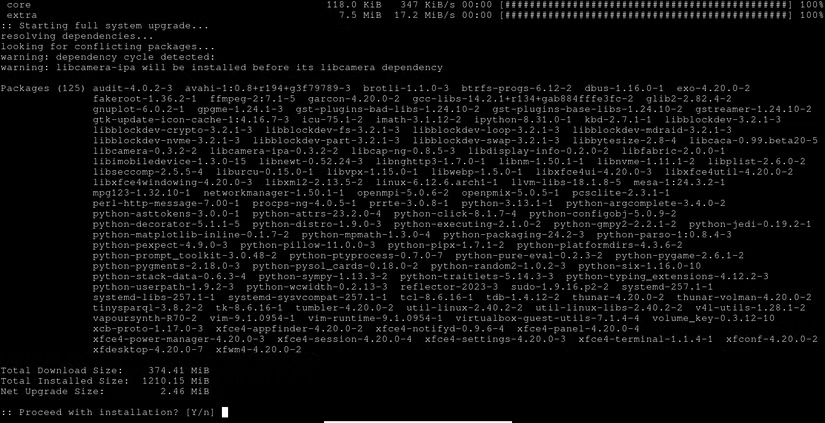
This is something that’s likely to come up when you have more experience with Linux. Some distros, like Arch, are well-known for having rolling releases, where new versions of software are added as soon as the developers can integrate them. Debian is famous for preferring older, more “stable” versions of programs in the stock version.
Many users feel a sense of “FOMO” about software versions. You might be tempted to switch to a distro that has newer software, but newer isn’t necessarily better. A new program can often just introduce bugs. On the other hand, if you upgrade your software faster, bugs can also get fixed faster.
The kinds of people who really want newer software tend to be power users and developers, for whom new versions of programming tools and libraries really do matter for their work. Fedora, another distro that’s known for newer software, is popular among Linux kernel developers, including Linus Torvalds himself, for this reason.
You don’t have to switch out the whole system just to access newer packages. A lot of popular open-source programs let you add their own repositories to your package manager. It’s also possible to add another package manager for a specific set of packages. Anaconda and Pixi are examples that are geared toward data science.
The advantage of this approach is that you can have a stable base system while still getting newer versions of the stuff you care about.
You’re afraid of breaking something
Tread lightly, keep backups, or try an immutable distro
Linux seems to invite tinkering, more than any other operating system. It’s possible to go overboard and trash your system. This can be part of the learning process, akin to touching a hot stove. Messing up your system once will often make you more careful about making changes to your system in the future. You’ll also quickly learn the value of good backups and keeping good notes on changes you make to your system.
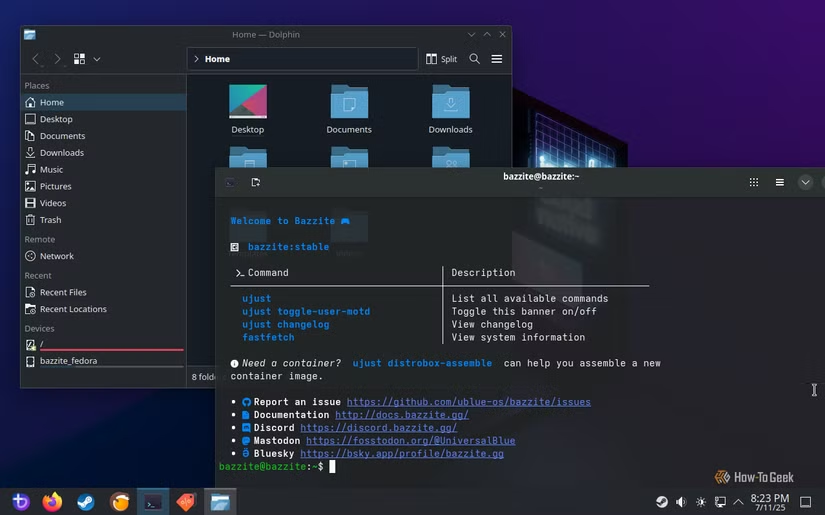
It’s rare on major distros, but changes can come from things that aren’t your fault, such as a package update that makes it impossible to boot or log in. Or worse, your important files can get wiped out. One antidote to this problem is an “immutable” distro. This means that the distro ships with a “core” that’s impossible to change. When changes are made, a new system is effectively installed in place. Bazzite and NixOS are two of the most popular immutable Linux systems.
You have trouble finding the right software
Bigger distros, better software
Linux isn’t like Windows, but it’s attracting more development, including in games, as it grows as an alternative to Windows. The Steam Deck has also boosted interest in Linux gaming. The selection of native Linux software available through your package manager is extensive on its own.
Smaller distros, unless they’re based on larger systems like Debian, often have fewer developers to adapt and test packages. This can mean fewer programs are available. The only remedy might be to use an alternative package manager or switch to another distro if you feel constrained by the available software.
You have trouble finding help with your system
There’s safety in numbers with popular distros

The nice thing about Linux and open-source software is that if you have a problem, so has someone else. You might find a solution in a forum or in an article like the one you’re reading now. You can fix it and move on without having to listen to hold music and confirm that, yes, your computer is plugged in. Even better, you can get help from the people who actually wrote it instead of an operator following a script.
While most communities are friendly these days, if you use a smaller distro, you might have trouble getting help with a problem or dealing with a snarky response. Larger distros tend to offer better support because they have larger pools of people who can help, and many bigger projects enforce codes of conduct that ban rude responses. You don’t want to deal with the kind of people who complain about the latter anyway.
New to Linux? Don’t sweat the distros yet
If you’re new to Linux, you should try a popular distro first. There’s safety in numbers when you want good software and support. You can then branch out into esoteric distros with rolling releases once you get more comfortable.