
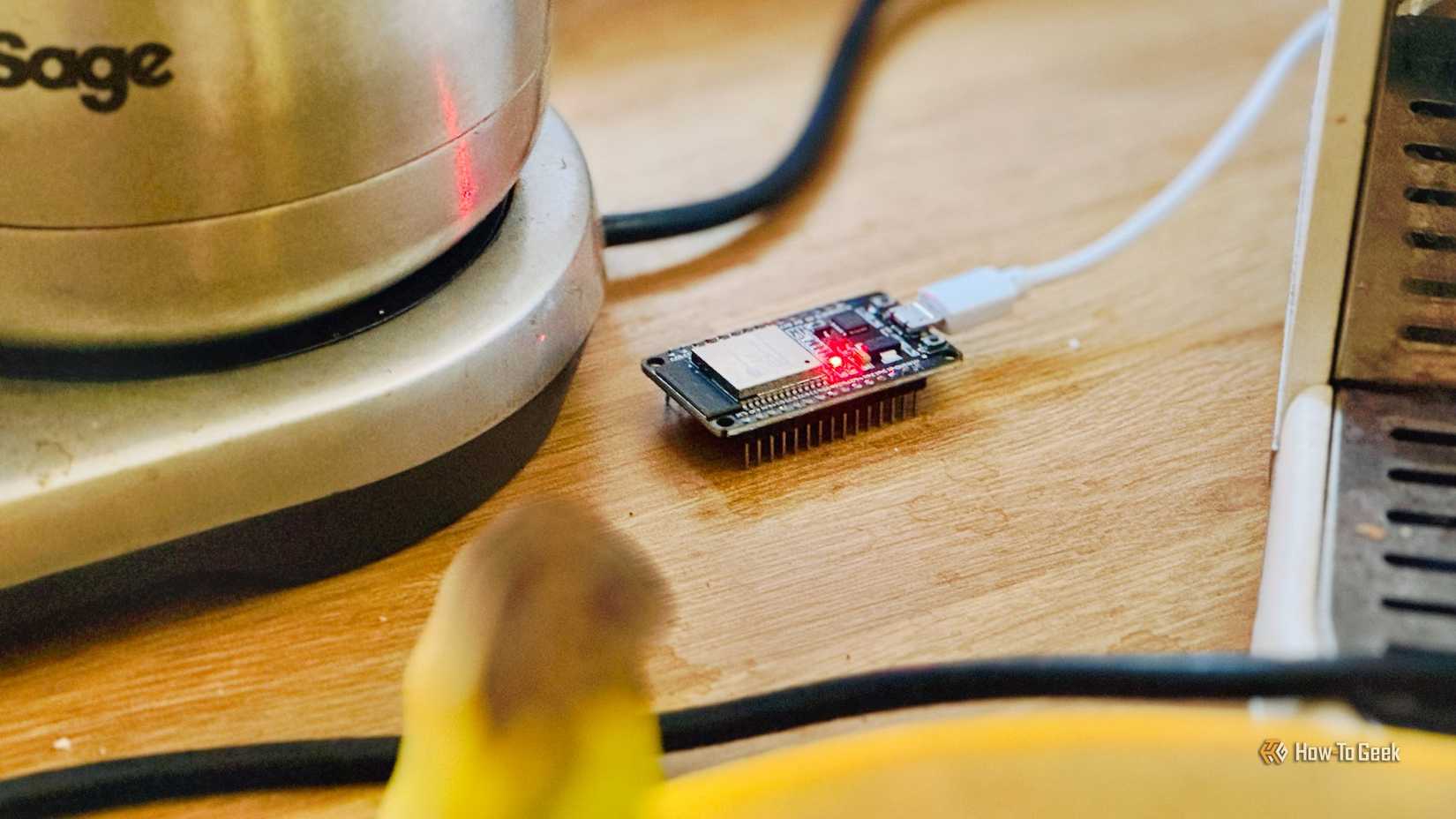
ESP32 boards are incredibly cheap, and you can buy basic sensors to make them even more useful for just a few dollars. This means you can use an ESP32 to build projects that will save you more money than you spend on the hardware, effectively paying for themselves. Some of these projects are easy to set up, even for beginners.
Stop heating and cooling rooms when no one is there
An ESP32 can help determine when a room is occupied
Many smart thermostats offer presence-based features. Using methods such as geofencing through your mobile devices, your smart thermostat can determine when you’re at home and when you’re away, so that the heating or cooling can be disabled when no one is home. This can save you a significant amount of money, since you’re not paying to heat or cool an empty home.
You can save even more money by applying the same principle room by room. If you’re only in your bedroom at night, for example, then there’s no point heating it all day.
An ESP32 can help in several ways. You can flash an ESP32 with Bluetooth proxy firmware and use the Bermuda Home Assistant integration to track the devices you carry with you, such as your phone or smartwatch. By estimating which room you’re in, you can turn off the heating in any unoccupied rooms.
Another option is to connect a cheap mmWave sensor to your ESP32. This can detect when someone is in a room, even when they’re sitting still, and you can use this information to turn your heating on and off. You can buy options including the LD2410 mmWave sensor with header pins attached, so you can connect the module to the pins of your ESP32 using Dupont jumper wires, meaning there’s no soldering required.
Turn off your dehumidifier when you don’t need it
Don’t run your device longer than you need to
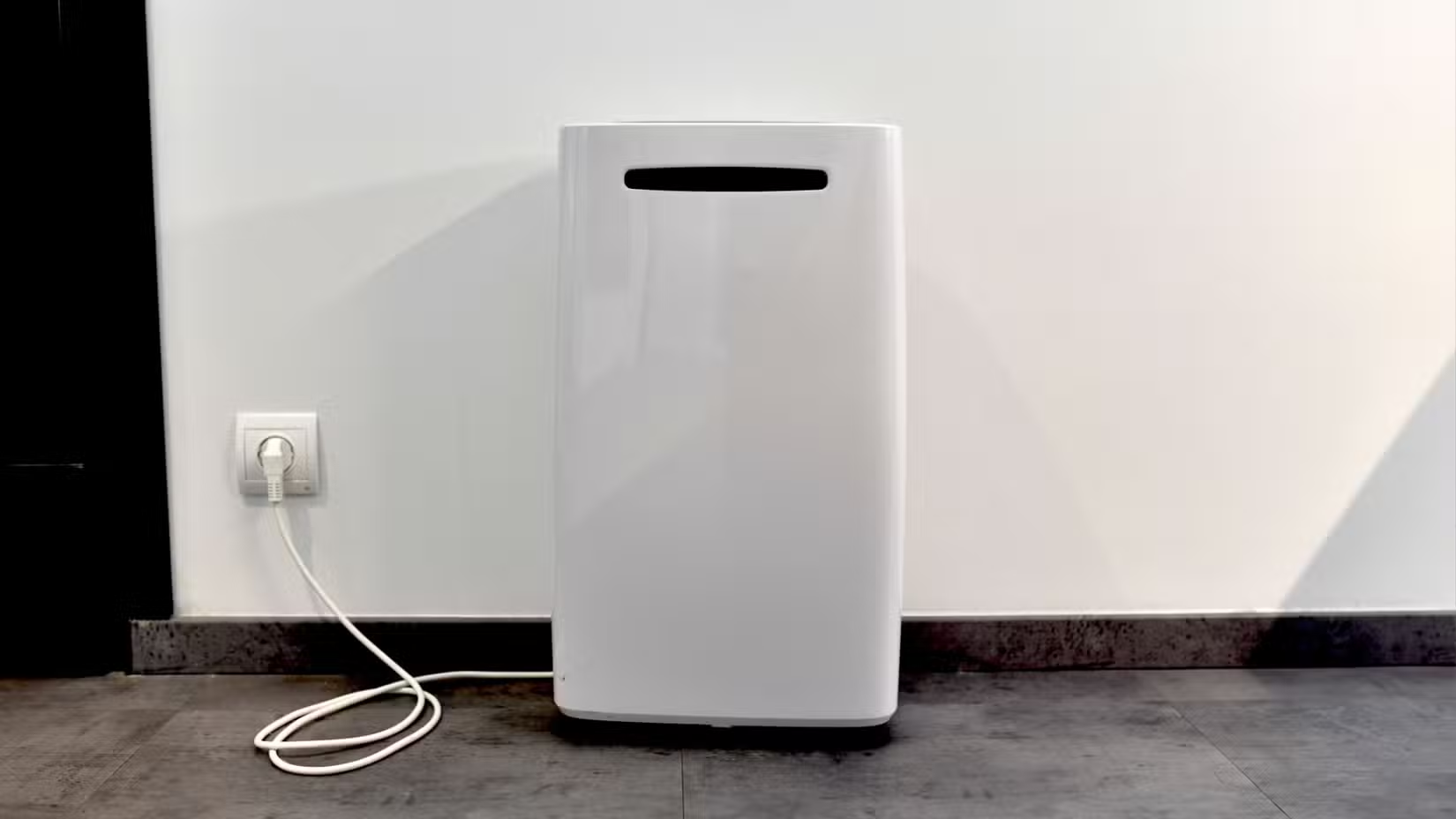
Another useful way to save energy using an ESP32 is to make your dehumidifier operate smarter. While you can buy dehumidifiers with smart features, these are often more expensive and may rely on cloud services, which means that you may lose smart features if the internet goes down.
You can use an ESP32 connected to a temperature and humidity sensor to measure the humidity in the room where the dehumidifier is running. Using software such as Home Assistant to monitor the humidity reading, and a suitable smart plug, you can automatically turn the dehumidifier off when you reach your target humidity. The same automation can turn the dehumidifier back on if the humidity rises too much.
This ensures your dehumidifier runs only when you want it to and isn’t struggling to suck more moisture out of your room unnecessarily. You can find pre-soldered temperature and humidity modules online for just a few dollars, so it’s easy to wire them up to your ESP32.
Stop killing your plants by watering at the wrong times
Build your own cheap moisture sensor
If you’re like me, you’ve probably killed a lot of houseplants in your time. Sometimes I would forget to water until it was too late, and other times I would water too often, with similar results. This meant I was continually buying new plants to replace the ones I’d killed.
I use an ESP32 to help stop the guesswork. Instead of sticking your finger into the soil and trying to magically guess whether it’s moist enough, you can connect your ESP32 to a cheap soil moisture sensor and get a much more accurate reading.
You don’t even need to use any additional software such as Home Assistant. I set up my ESP32s to flash their onboard LEDs whenever the soil moisture drops below a set level. I can see instantly whether the plant needs watering or not, and hooking the soil moisture sensors was as simple as pushing three cable connectors onto the relevant pins.
Catch a leak before it becomes an expensive problem
You can put low-cost ESP32 sensors in more places
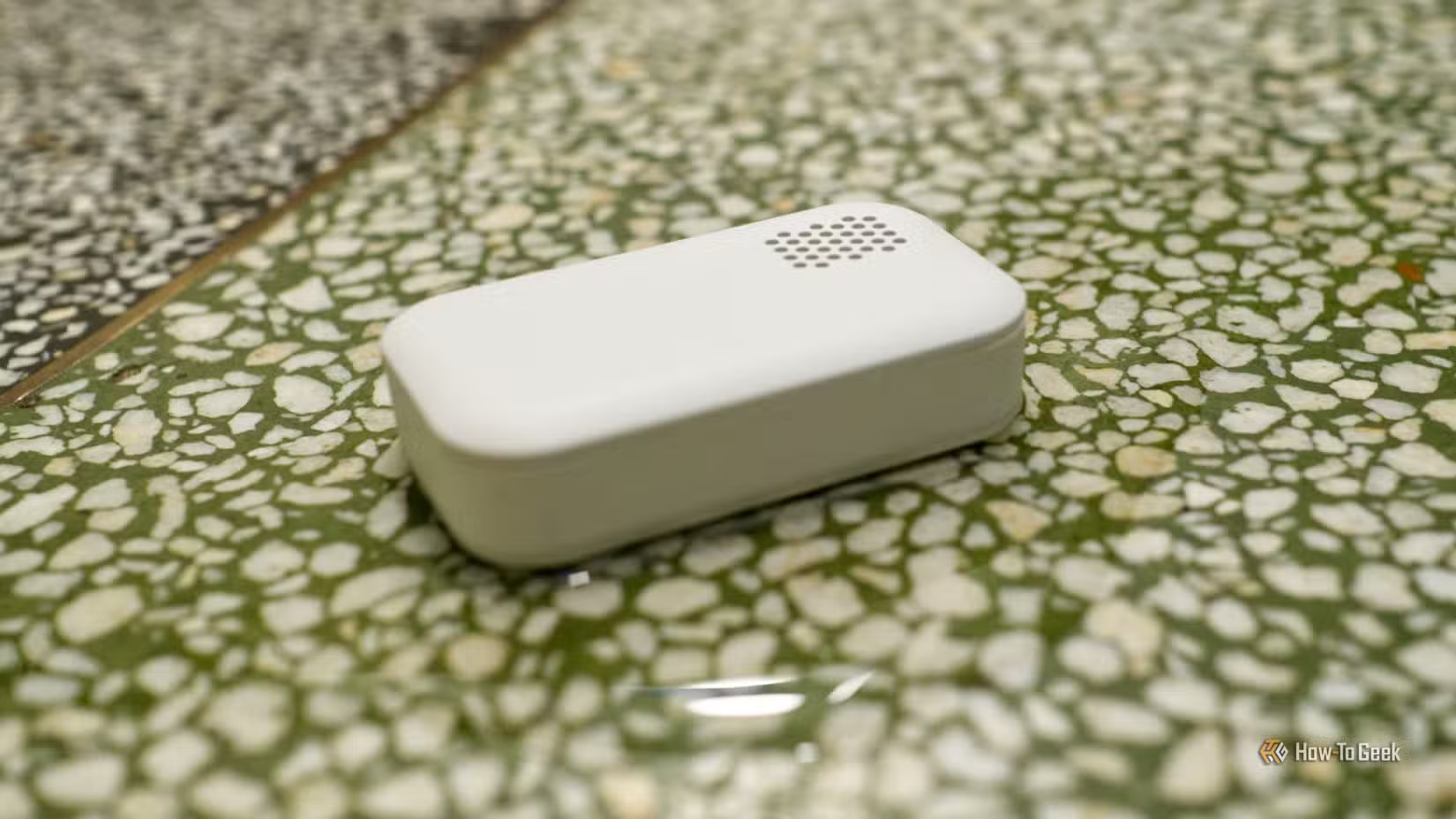
Water leak sensors are one of those devices that you hope you never have to use. If you don’t have them, however, you may live to regret it. A water leak sensor can detect a small leak before it becomes a large one and causes serious damage.
The problem is that you can never predict where a leak will happen. The more locations you can put water leak sensors, the better your chances of catching a leak. Commercial water leak sensors aren’t expensive, but buying a lot of them can soon add up.
You can buy off-the-shelf water leak sensor modules with the header pins already installed. You can then hook them up to cheap ESP32 boards and place them all around your home. You’ll need to consider how to protect the boards in the event of a leak.
Save your freezer before you lose all your food
Monitor your freezer temperature with an ESP32
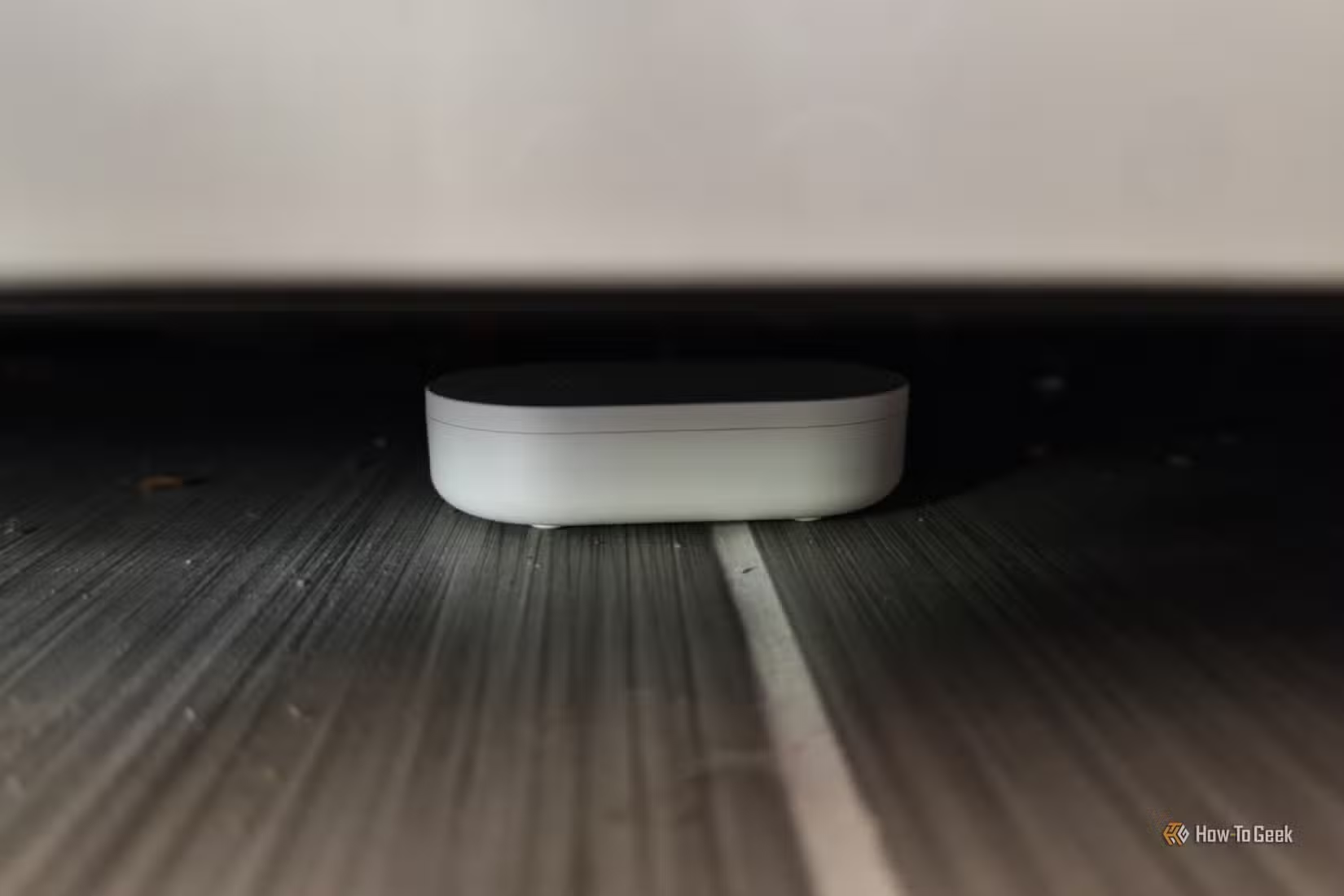
If there’s a problem with your freezer, you can lose hundreds of dollars’ worth of food if you don’t discover it soon enough. You can avoid an expensive restock by monitoring your freezer with an ESP32.
You can use an ESP32 to build a simple contact sensor that can alert you if the freezer door is left open, or build a water leak sensor to detect the melting water from your freezer. You can also hook up a temperature probe to your ESP32 and measure your freezer’s internal temperature, so you’ll know if it rises too high. Many of these probes come with bare wires and require the addition of a resistor on the data line, but you can buy ready-made modules that include all these components so that you only need to connect the relevant pins.
ESPHome makes ESP32 projects easier
Building your devices is only half the job; you also need firmware for your ESP32 to run. ESPHome makes this easier by letting you create configuration files instead of writing complex code. Even these configuration files can be confusing, but if all else fails, you can ask an AI chatbot to write them for you.