
I love the convenience of my battery-powered home security cameras, but buying a dozen new AA batteries every few months—not so much. Most of the big-name security and smart device brands, like Arlo and Blink, strongly advise against rechargeable batteries, but I tried it anyway, and the results are better than I expected.
Everything is too expensive these days, including quality disposable AA batteries. Regardless of what Blink or Arlo says, your battery-powered cameras won’t last “up to two years” on a single set. Instead of constantly buying new ones, I tried some rechargeables to see if I could save some money.
AA batteries aren’t all the same
And neither are rechargeables
Without getting too technical, just know that not all AA battery packs are created equal. There are cheap zinc-carbon options denoted by an “R6” somewhere on the package or cell, alkaline batteries, and lithium (or Lithium Manganese Dioxide) batteries, not to mention NiMH and NiCd rechargeable batteries, to name a few.
Before I continue any further, it’s important to note that my results are specific to Blink cameras, though the logic should apply to many other brands. Blink says to avoid rechargeable batteries because they typically operate at 1.2 or 1.3V, which isn’t enough to power its camera systems reliably.
By using lower-voltage rechargeables, your cameras might not work or be slow to start recording or sending alerts, resulting in an overall poor experience. Instead, your Blink wireless outdoor security camera requires two 1.5V AA batteries.
Blink recommends Energizer Ultimate Lithium AA batteries for its outdoor security cameras, and I’ve been using them for years. They’re some of the best you can buy, work great at various temperatures, and have a large 3,000 mAh capacity and a constant 1.5V output.
Another reason for that recommendation is the high 3,000 mAh capacity of Energizer’s Ultimate Lithium. Some cheaper brands have lower capacities, especially rechargeables, and those won’t keep the cameras running as long.
Using USB-C Lithium rechargeable AA batteries in my camera
Ignore the low-battery alert, these work just fine
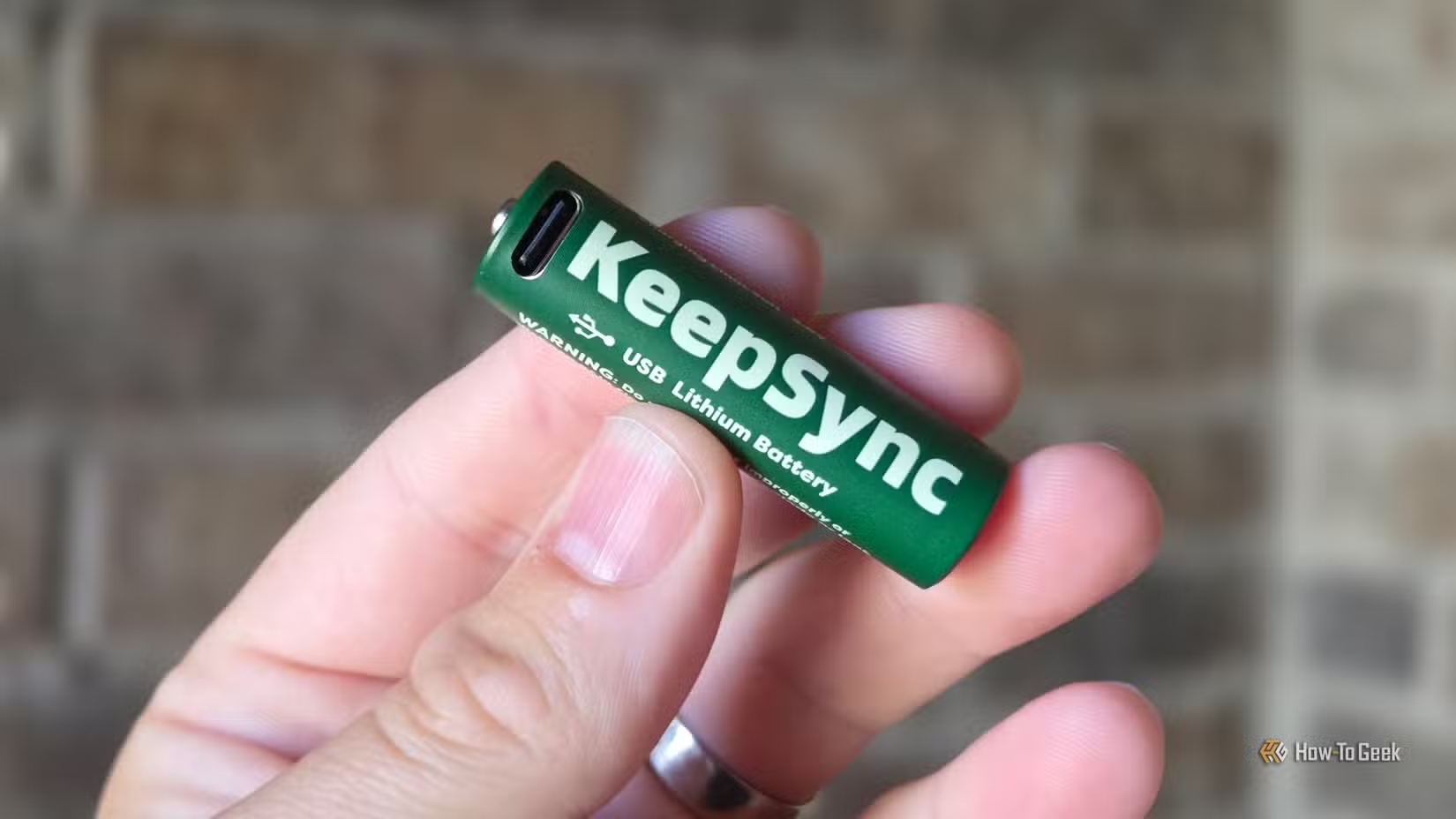
Regular NiMH and NiCd rechargeable batteries aren’t ideal for wireless security cameras because they don’t provide the correct voltage. I absolutely love Panasonic Eneloops, but they only run at 1.2V.
Instead, I bought some 1.5V USB-C rechargeable AA Lithium batteries and stuck them in my Blink camera. I wasn’t sure what to expect, but it turns out they work perfectly fine. They deliver the required voltage, my notifications and recordings worked the same as always, and nothing really changed.
I chose a model that promised 2,800 mAh, specifically mentioned 1.5V, and bought 8 of them. So far, they’ve been in my Blink cameras covering my driveway and front door for a little over two months, and they’re still going strong. I’ve had a “low battery” icon on the screen since day one, but they’ve yet to die.
Even with our current brutal 100°F weather here in Texas, these USB-C rechargeable batteries are doing a fine job. One important thing to note is that with regular disposable batteries, the power will start to fade as they’re about to run out, and your device (or in my case, security camera) can alert you to a low battery. Then, you’ll have a while before the battery actually dies and needs to be replaced. Similar to how a flashlight slowly dims before it stops working.
With these USB-C rechargeable AA batteries, I’m getting a constant voltage, and the cameras seem a bit confused, which is why there’s a low-battery icon on the screen. Where these will differ from disposables is that they’ll run at full 1.5V until empty, then die. I won’t get any warnings or notifications from the camera. It’ll just stop working.
And while that’s not ideal, whether I’m alerted to it or not, once the battery runs out, I’ll have to jump on a ladder and replace them anyway. Only now I can quickly charge two more with the same cable I recharge my phone with, throw them in, and continue with my life.
I’ve been using these weird USB-C rechargeable AA batteries in various things around the house for the last year, and I have no complaints. They’re extremely convenient.
To clarify, inside these USB-rechargeable AAs, there’s a tiny 3.7 Li-ion cell, plus some sort of converter to regulate it down to a 1.5V output, and a charging circuit. I doubt they’re actually 2,800 mAh, and I’m not expecting them to last as long as the Energizer Ultimate Lithium I usually use. That said, it’s been about two months, so I’m happy. I typically have to replace the battery in my cameras every 3–5 months.
Convenience is key
At the end of the day, these USB-C AA batteries are pretty weird, but I absolutely love them. They certainly can’t replace regular AAs in a TV remote or in toys, as they don’t have the endurance or shelf life. They also won’t be replacing NiMH anytime soon, or those Eneloop cells in my camera flash and other equipment.
But what they do offer is convenience. I got an 8-pack for $24, have recharged them via USB-C probably 15–20 times, and they’re still going strong. And now that I know they’re serviceable in my smart home cameras, I’ll be buying more.