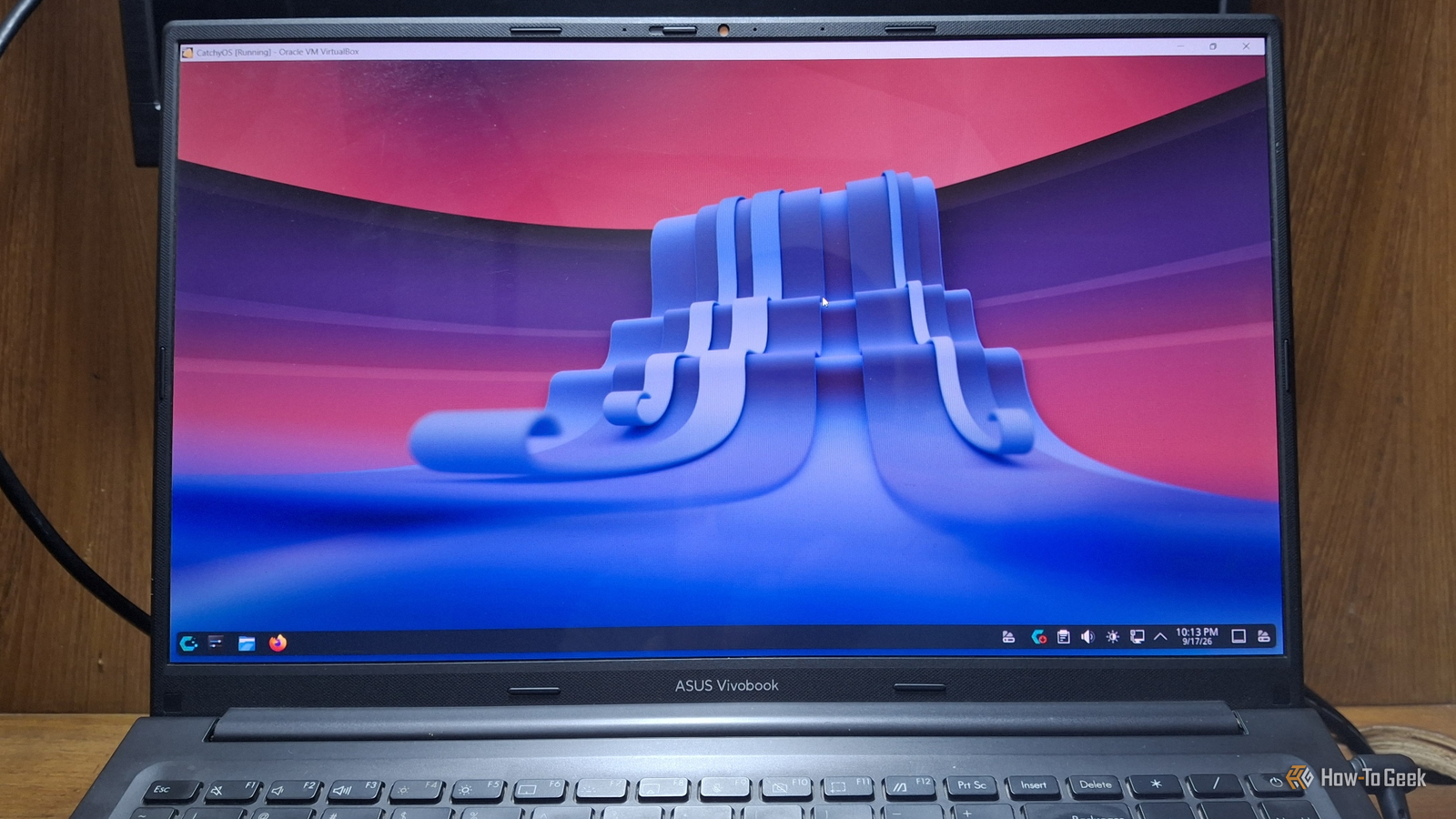
I’ve never used Arch before. Not even an Arch-based distro. When I came across CachyOS, it didn’t scream “Arch-based” to me, though under the hood, it was. After spending some time with CachyOS, I realized there was another way into the Arch world.
Beginner Linux users avoid Arch in favor of a simpler and more popular distro. But that also means they miss out on the fun side of learning how Linux works and Linux’s philosophy. That’s what I’ve found interesting about CachyOS.
Vanilla Arch gives you all those decisions with no guidance. Most “easy Arch” distros make the decisions for you and hide them under layers of tweaks. CachyOS gives you the same choices with explanations and sensible defaults while staying close enough to Arch that what you learn carries over.
Arch’s biggest beginner barrier is the hand-built install
It asks questions you don’t know how to answer yet
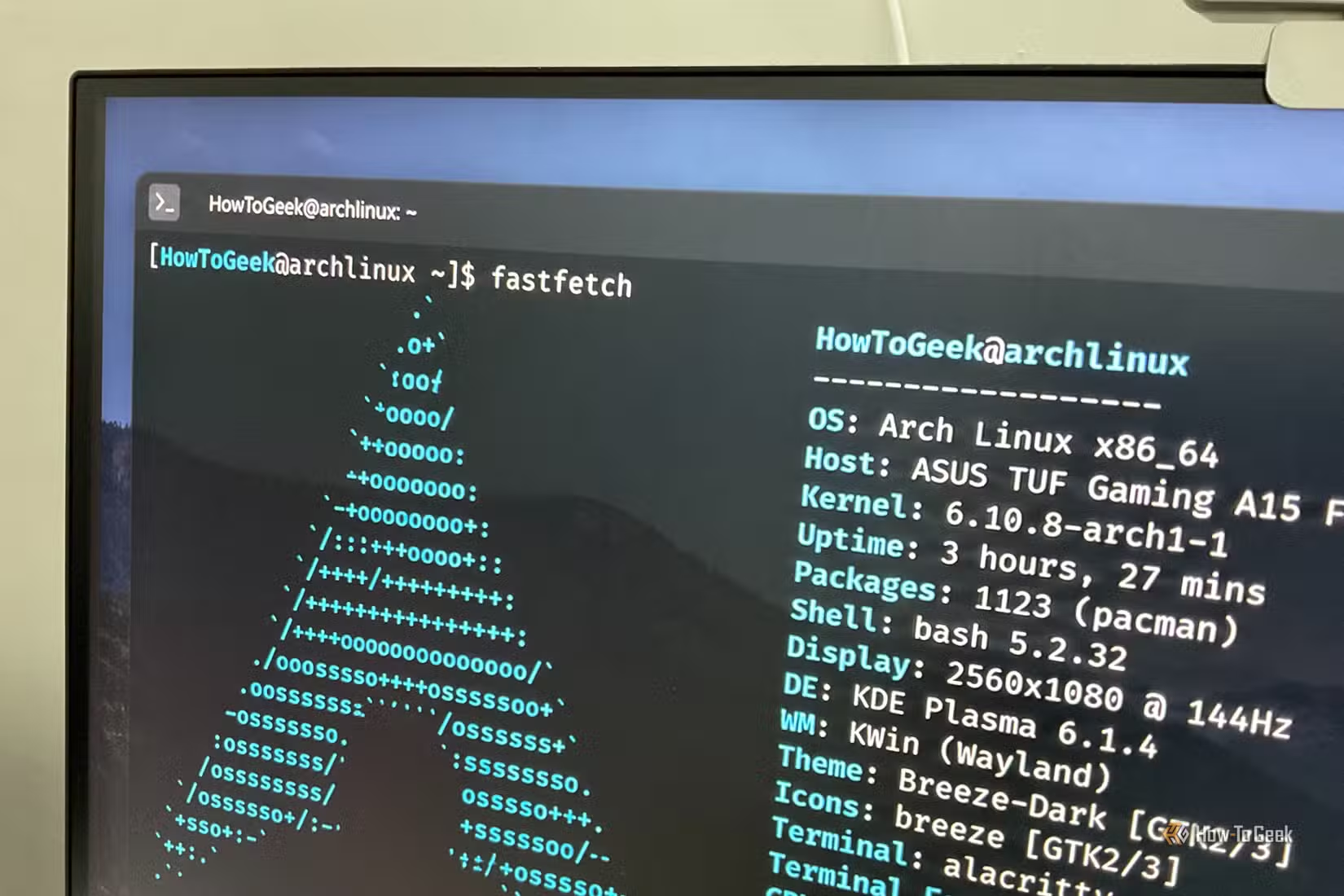
Ask why Arch carries such a scary reputation, and even veteran users will point straight at the installation. A clean Arch setup means partitioning, mounting, setting up networking, and configuring the whole base system by hand in the terminal, with the wiki open in another window.
None of those things are necessarily difficult once you understand them. The problem is that a newcomer is being asked to make several important decisions before they know what those decisions actually mean.
To knock that barrier out, we’ve had many “Arch but easier” flavors until now. Graphical installers do the heavy lifting for you. Twenty minutes of clicking through the installation wizard, and you have an Arch-based system running without a sweat.
Now, this approach also introduces a problem that goes unnoticed. You have a functional system that you don’t understand. You still can’t explain your bootloader, your filesystem, or half of the running processes.
Most beginner-friendly Arch distros hand you a system you didn’t build
If something breaks, you don’t know what’s inside
Even some Arch-based distros are advertised as Ubuntu- or Linux Mint-like. I’m pretty sure that’s not what Arch was made for. It was made for customization and more user control.
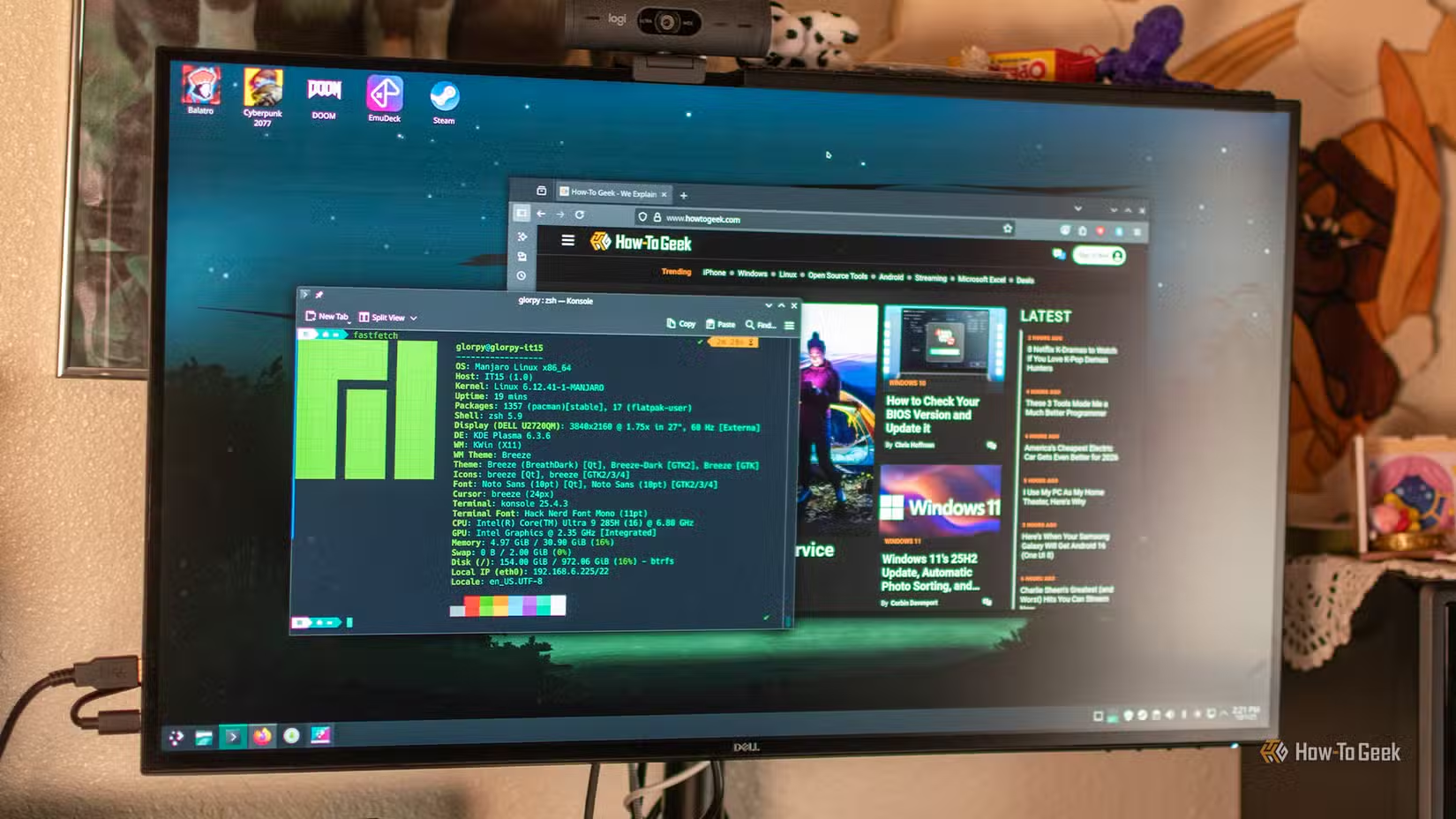
Take Manjaro, for example. It holds packages back from upstream Arch for extra testing. It has its own set of tools. That can create a different experience than running Arch itself. It also means you need to understand that you’re not simply running Arch with a graphical installer. If you explore the Manjaro wiki, you’ll even see them saying “it is Arch-based, not Arch.”
Garuda took a different path. Out of the box, it looks gorgeous. However, a lot of that shine relies on meta packages that pull in many unwanted applications you never asked for. What stopped me from using Garuda was that if something misbehaved, I’d be untangling someone else’s choices.
This is not to say that these are bad distros in any way. However, they are hiding away the exact parts a learner or power user needs to see.
CachyOS turns every install choice into a small lesson
The installer explains your options instead of skipping past them
CachyOS runs on Calamares, the same installer base as many of its rivals. The difference is what CachyOS chooses to put in front of you, and how much it explains along the way. This helps you decide the installation steps meaningfully.
Think about the bootloader step. In January 2026, CachyOS moved it right into the installer and set Limine as the default, with a short description sitting next to each option. During my installation, that short description gave me an idea of what each option meant and why I might go for one over the other.
The desktop selection does something similar. You get animated previews sorted from the easy, ready-to-go setups down to the advanced window managers. Not to mention, you still choose your filesystem, your kernel, and your extra packages yourself, from a visible list.
I went with KDE Plasma and Limine. But not because they were the default options. I was thinking of going with GNOME first. I picked this combo because the short notes sitting right there in the installer helped me understand that these fit my use case better.
You don’t outgrow CachyOS, you grow into Arch
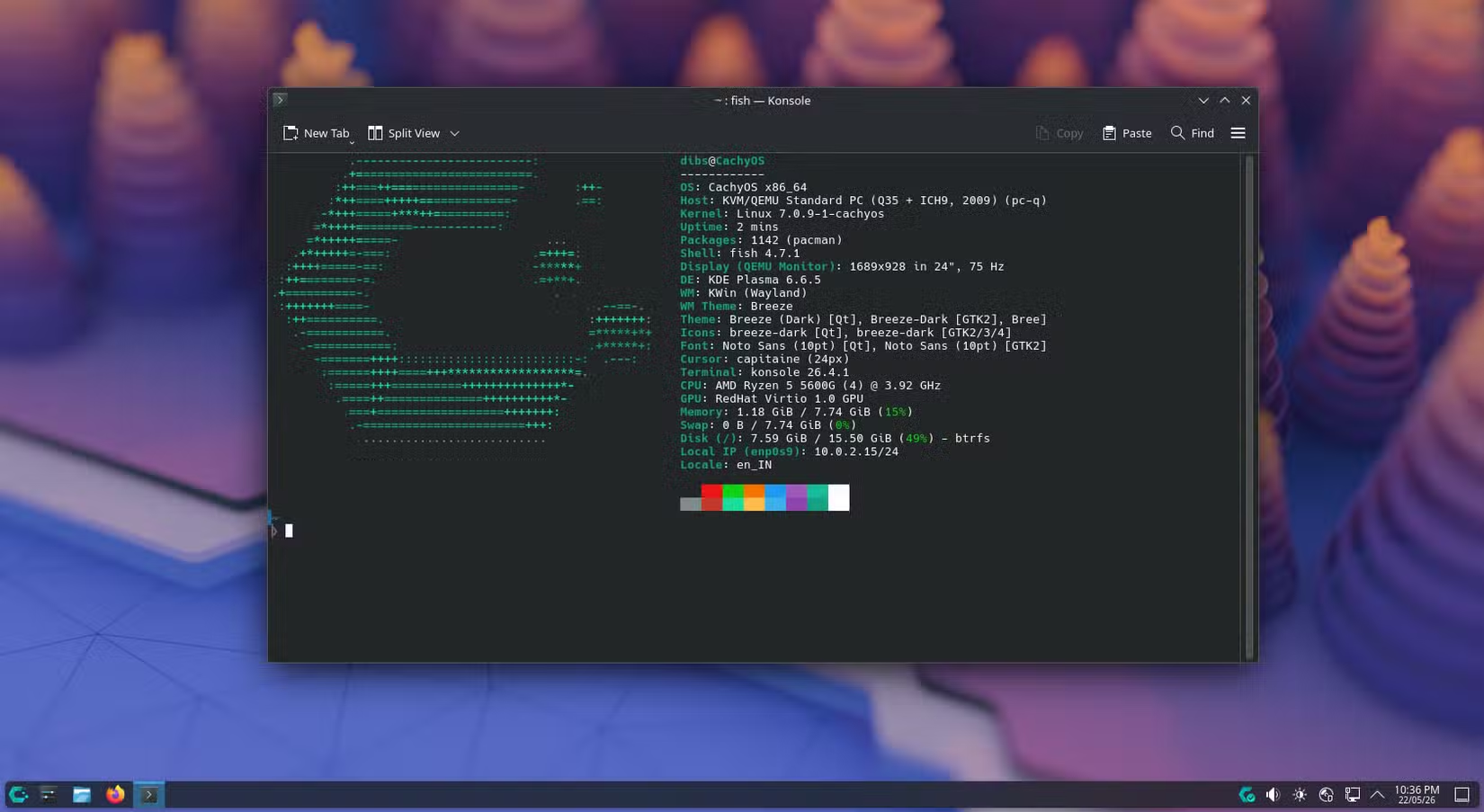
That’s the whole magic for me. CachyOS handed me the knowledge I needed to understand Linux so that Arch doesn’t feel alien anymore. Perhaps in the near future, I’m going to use Arch, by the way. CachyOS has also closed the gap that kept me on Windows.