
Android trackers used to lag far behind AirTags, but they’ve closed the gap considerably. Google’s Find Hub now supports crowdsourced location finding, tracker sharing, and Ultra Wideband (UWB) precision finding when using compatible phones and trackers. AirTags still do a few things that Android trackers can’t when using Google’s Find Hub.
Getting warned when you leave an item behind
AirTags let you know before you even realize something is missing
The Find My app can send you a notification when your iPhone becomes separated from an AirTag or other supported Find My item. For example, if you put an AirTag on your keyring and walk out of a coffee shop with your keys still on the table, your iPhone can notify you that the AirTag was left behind. Instead of simply helping you track down lost items, AirTags can actively prevent you from losing them in the first place.
This Notify When Left Behind feature is one of the most useful things about AirTags. Currently, Google’s Find Hub has no equivalent feature, which is a significant omission.
The feature is on the way, however. The Pixel Tag is due to be released in November 2026, and Google has announced that it will support Left Behind alerts when it launches. For now, this is still perhaps the biggest advantage of using AirTags.
Find Hub uses aggregated locations by default
One of the cleverest features of AirTags is that they can use crowdsourced location finding. An AirTag doesn’t have its own mobile network connection, so if it gets separated from your iPhone, you might expect to lose contact with it completely.
However, nearby Apple devices can detect the AirTag’s Bluetooth signal and share its location using their own network connections, letting you track an AirTag in the wild even when you’re miles away. Find Hub uses a similar crowdsourced location system, but there’s a significant difference from Apple’s setup.
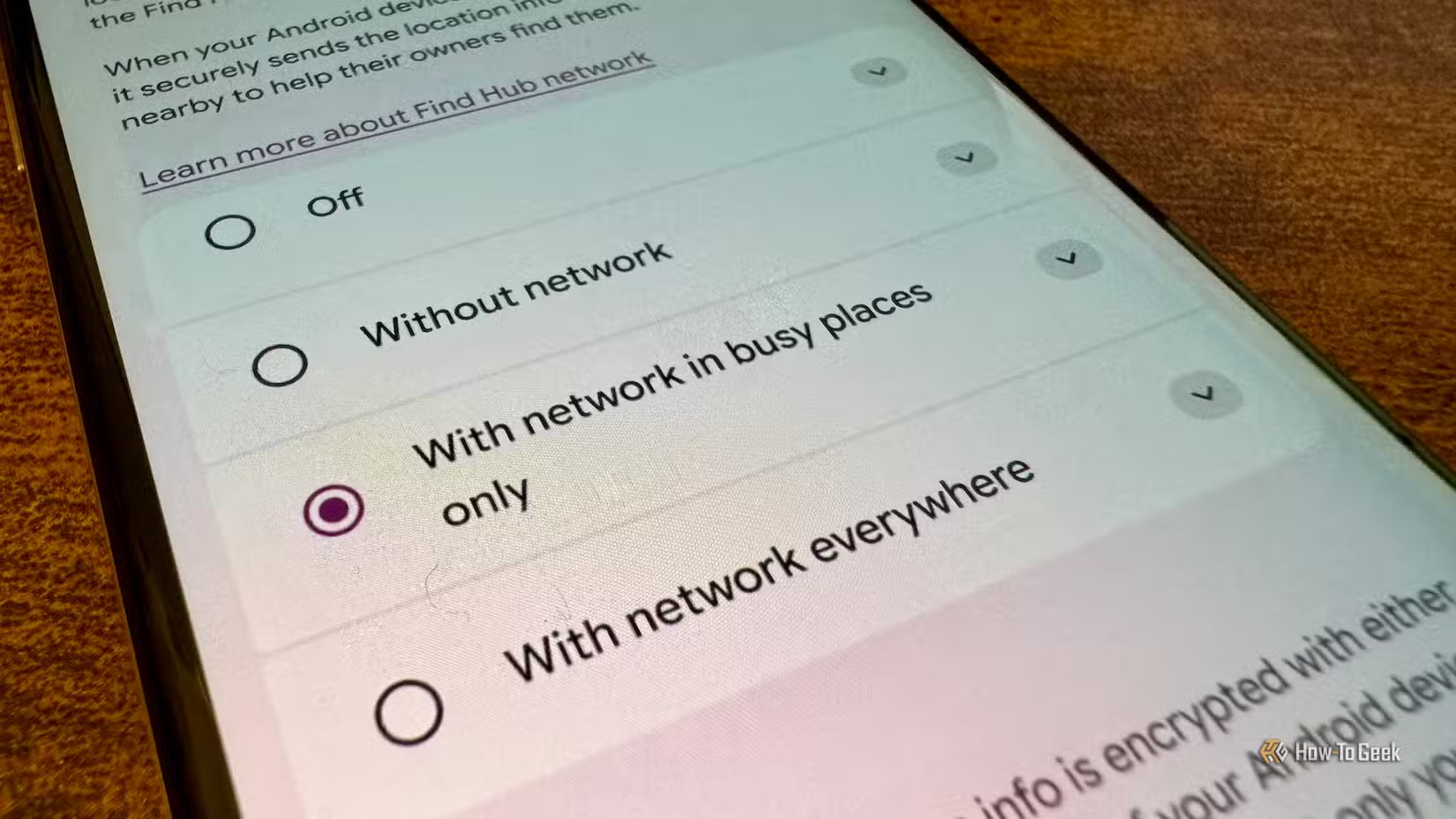
Find Hub’s default setting is With network in busy places only. This setting means that Find Hub waits for multiple Android devices to detect an item before providing the owner with the aggregated location. In other words, the feature works best in areas with a lot of foot traffic, such as airports or busy pedestrian areas.
If you lose your Android tracker on a quiet trail in the woods, and a single person carrying an Android device passes by, this default setting means that you won’t immediately be provided with the location of the tracker. This will only happen if the device is set to use the With network everywhere setting.
Apple’s Find My doesn’t have the same aggregation requirements. A single detection can be enough to share the location of your AirTag.
Precision Finding with every AirTag
Your Android phone and tracker both need UWB
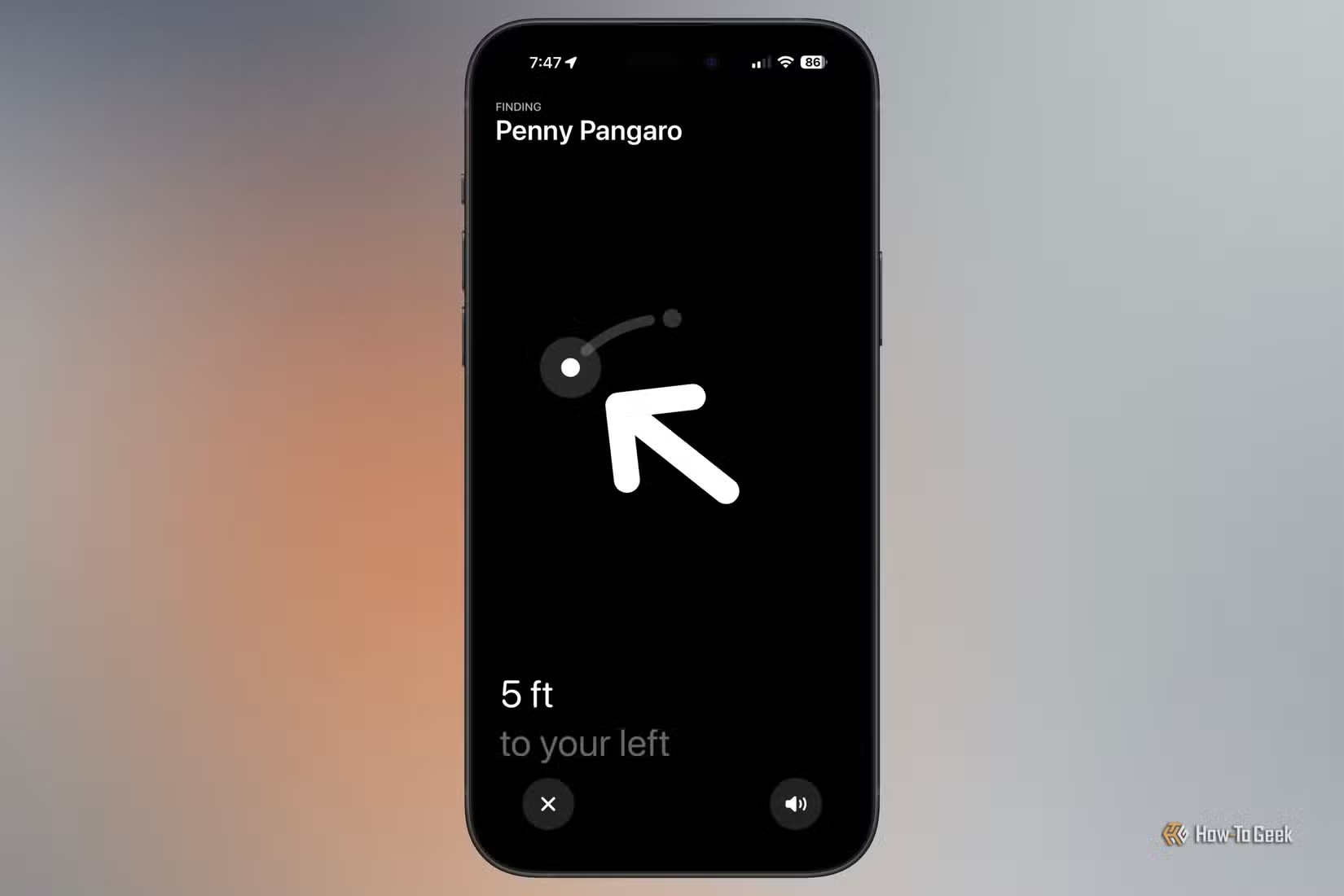
Finding the rough location of your device is only the beginning. Once you have a ballpark location, you need to know precisely where to look. Precision Finding with AirTags makes this possible.
Precision Finding uses short-range wireless technology called Ultra Wideband (UWB) to accurately determine the distance and direction of your AirTag from your iPhone. You can follow on-screen instructions to the location of the AirTag.
UWB isn’t exclusive to AirTags. Google’s Find Hub now supports a similar kind of precision finding using UWB technology. The difference is that this isn’t standard across all Android trackers.
Every AirTag includes UWB, with the new AirTag 2 including an upgraded Ultra Wideband chip for expanded Precision Finding range on newer iPhones. As long as your iPhone supports UWB, you can use Precision Finding for all your AirTags. With Android trackers, you need both a supported phone and a supported tracker, and not every tracker will work.
Using your smartwatch to find a tracker’s precise location
You can find an AirTag 2 without using your phone at all
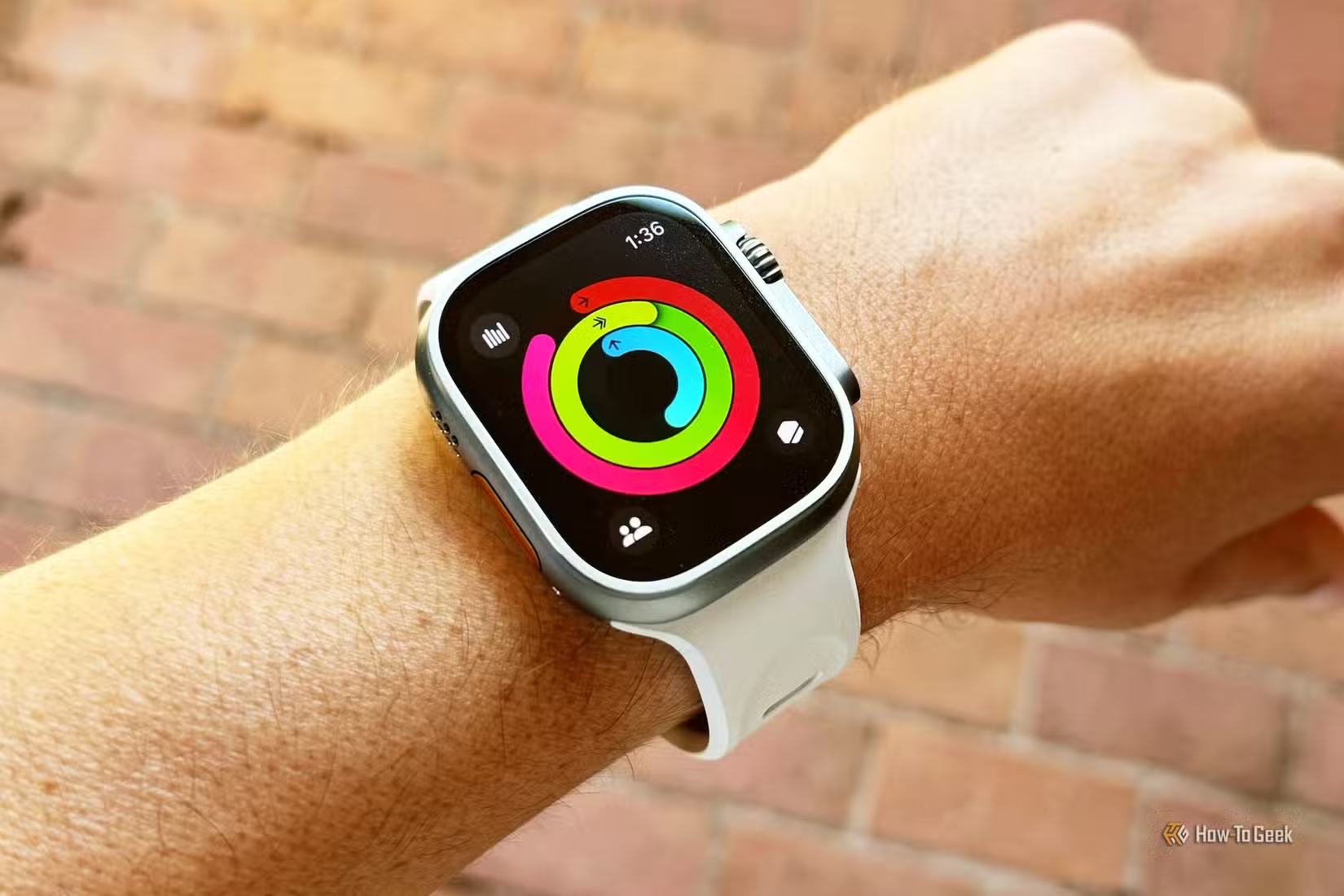
While Precision Finding will work for any AirTag with a compatible iPhone, if you’re using an AirTag 2, you can skip your phone completely. With an Apple Watch Series 9 or later, or an Apple Watch Ultra 2 or later, you can use Precision Finding for an AirTag 2 directly from your watch.
Even if you don’t have your iPhone to hand, you can follow the directions on your Apple Watch to lead you to the location of your AirTag 2. While Wear OS can work with an Android tracker to play sounds or give directions to its last location, you can’t use a Wear OS watch to find the tracker using precision finding; you still need to use your phone.
Google hasn’t announced this functionality for the upcoming Pixel Tag, either. While Google has said you will be able to use a Wear OS watch to ring your Pixel Tag from your wrist, it hasn’t mentioned precision finding from a watch, despite the Pixel Tag containing UWB tech.
Android trackers are catching up
AirTags used to have much better features than many Android trackers, but Google has slowly closed the gap. Android trackers still can’t match everything an AirTag can do, but that may not be true for much longer.