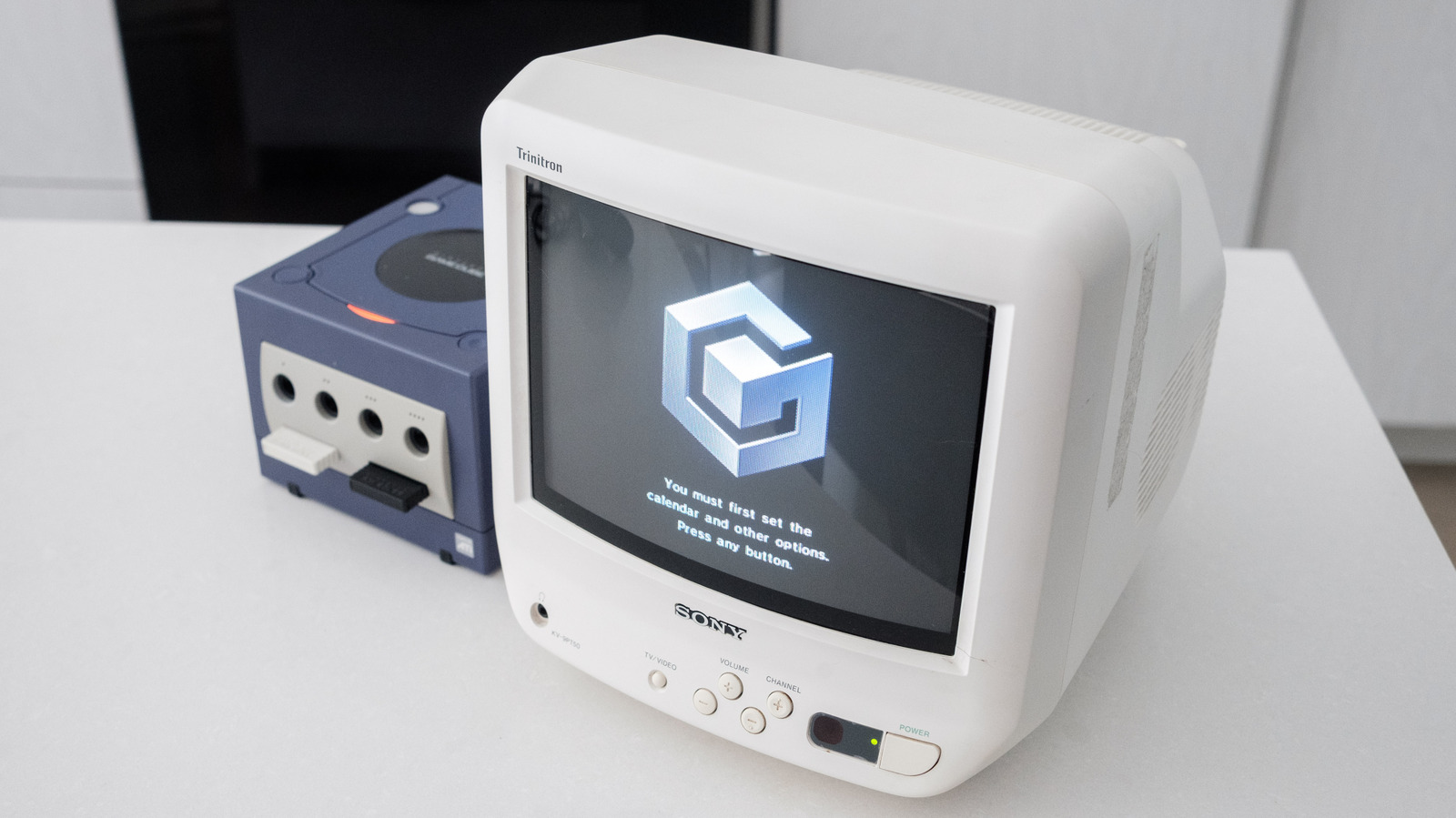
The year is 2001, and it will turn out to be among the most important 12 months in gaming history. By that point, the PlayStation 2 was already out and beginning its generational run of games, with Grand Theft Auto III, Metal Gear Solid 2 and Final Fantasy X all arriving within months of one another in late 2001.
It was also the year Nintendo released the GameCube. The console arrived in Japan on September 14, and would hit the shores of North America a few short months later on November 18. Nintendo’s diminutive system was something of an oddity back in the day. It didn’t play DVDs like the PS2 and Xbox, which was a major selling point of those systems. It also never had the third-party support the PlayStation 2 enjoyed, nor did it have a generation-defining exclusive like Halo: Combat Evolved. But looking back now, I think it’s safe to say the GameCube had an amazing library of games. And with the console turning 25 this year, there’s no better time to celebrate some of its finest moments.
Animal Crossing
This is the one that started it all and was the very first time that criminal Tom Nook saddled any villager with a predatory loan. Animal Crossing became available for US players in 2002 and was a modest success that grew over time, thanks to positive word of mouth.
What’s amazing about the first game in the franchise is how similar it is to newer entries. There’s still a real-time clock and daily activities, like fishing, hunting bugs and collecting fossils. The gameplay loop is just as open-ended as, say, New Horizons and the villagers can still be coaxed into saying absolutely ridiculous things. K.K. Slider is even here, performing acoustic ditties at the club on Saturday nights. These games have been refined, but never truly re-imagined.
There’s one major difference. The first Animal Crossing could not go online in any capacity whatsoever. This means we had to mess with our friend’s towns the old-fashioned way, by stealing their memory cards, teaching the villagers crude sayings, leaving trash all over and returning the cards in the dead of night. It was a fun time!
It’s also wild to think of how quickly Nintendo was dropping new franchises during those early GameCube days. Animal Crossing is still a big IP for the company, as is Luigi’s Mansion and Pikmin.
— Lawrence Bonk, contributing reporter
Eternal Darkness
This is quite possibly the weirdest horror game ever made and, for my money, one of the scariest. That’s because every aspect of the design is intended to make the person playing it feel like they’re going insane. There are fake instant deaths, audio drop-outs, sudden camera shifts and creepy bugs that appear to be crawling all over the television. The game even pretends to delete saves and occasionally displays a fake blue screen of death. It drove me absolutely batty back in 2002, in the best way.
Eternal Darkness may not have invented the concept of messing with the player, but it pretty much perfected it. The closest modern comparison would be something like the roguelite fishing sim Dredge when night falls. It’s also worth noting that this was actually published by Nintendo, gore and all.
Beyond the tomfoolery, this is a great third-person horror game with a mythology pulled straight from Lovecraft. Players control a dozen characters across multiple time periods spanning thousands of years. The vibes are immaculate and both the puzzles and combat are fun. There’s even a mechanic that lets players aim for various body parts to cleave ’em straight off. The magic system is fairly involved, providing a bit of RPG flavor.
The only downside? It’s not really playable right now, unless you track down a working Gamecube and a game disc. It’s never been re-released, ported, or remastered, though that might change in the future.
— LB
Fire Emblem: Path of Radiance
After the runaway success of Awakening and Three Houses, it’s hard to see what made Path of Radiance, Fire Emblem’s only GameCube release, so special back in 2005. Two decades later its presentation looks stiff and dated, and the game is missing the relationship mechanics loved by newcomers. But in Path of Radiance you’ll still find many of the elements that came to define later Fire Emblem games.
They exist in a sort of prototypical form since this was the first game in the series to make the jump to 3D. We take a lot of it for granted now, but back then series developer Intelligent Systems had to figure out the mechanics for the first time. And it did, making for a game that’s still fun to play to this day. It has one of the best stories in the series, with an English script that captures a lot of the nuances of the Japanese original.
— Igor Bonifacic, senior reporter
F-Zero GX
The original F-Zero for the Super NES is one of those games I wore out as a teenager. While the futuristic space racer only had 15 courses, they were beautiful and challenging, and even when I did well, I always felt like I could do a little better. A little over a decade later, F-Zero GX hit the GameCube and showed just how far racing had come.
The basic concept is the same: high-speed futuristic hovercraft battling it out in wild, creative courses where one mistake can lead to disaster. The GameCube’s horsepower meant the courses were longer, more complicated and visually stunning. The sense of speed was probably the biggest change, though: even now, 23 years later, this game feels incredibly fast. That speed makes it positively unforgiving, and I never progressed that far through the game’s many challenges. Driver AI was also significantly improved. In the first game, you mostly only had to worry about the three main rivals. But in GX, it’s easy to end up in 15th or 20th place in the blink of an eye if you’re not careful.
Despite that, I still remember the game fondly, in large part because it’s the last real entry in the F-Zero franchise. I didn’t play the Nintendo 64 entry in the series, so the jump from the SNES to the GameCube was mind-blowing at the time. Sadly, Nintendo still hasn’t revisited the series since then — but at the very least, you can play F-Zero GX on the Switch 2 thanks to the Nintendo Classics GameCube collection available with a Switch Online Expansion Pack subscription.
— Nathan Ingraham, deputy editor
Mario Kart: Double Dash
I have fond memories of Mario Kart: Double Dash for a not-unique reason. In the early 2000s, my friends and I had frequent co-op video game nights, and Double Dash was a mainstay in our lineup. Mario Kart games have always been amazing in local multiplayer, and Double Dash was no exception. After Mario Kart 64, it was disappointing that all four players couldn’t compete directly against each other, but we quickly got used to the game’s unusual mechanic that let one player drive and another throw weapons. Having two teams of two players was an interesting wrinkle to the gameplay, and it makes Double Dash one of the more unusual games in the series.
As with most GameCube games, it looks wonderful. Mario Kart 64, like a lot of N64 games, hasn’t aged as well visually, but Double Dash is still gorgeous, and Nintendo took a major step forward in terms of creativity and variety in the game’s levels. There are more hidden routes and ways to approach each level than ever before, and the scope of boards like Wario Colosseum and the game’s take on the ubiquitous Rainbow Road were unmatched at the time. It’s no coincidence that almost every course in this game has appeared in subsequent versions of Mario Kart — so even if you never played Double Dash, you’ve likely come across some of its iconic tracks.
— NI
Metroid Prime
In the 80s and 90s, the Metroid franchise was defined by three classic titles: the original Metroid for the NES, Metroid II: Return of Samus on the Game Boy, and Super Metroid on the Super NES. They cemented Metroid gameplay as a side-scrolling action / exploration game, with a non-linear set of levels. Players would come across areas that you couldn’t fully explore before beating bosses and finding items in other parts of the game.
Metroid Prime, however, completely turned the series around, putting it in 3D for the first time. While the style resembled a first-person shooter, the gameplay still put exploration at the forefront, rather than fast-paced gun fights. That said, the game is plenty challenging, even punishing at times in its difficulty: its massive bosses and twisting tunnels full of enemies were unforgiving.
But for me, the most memorable part of Metroid Prime is the incredible atmosphere of Tallon IV, and the wonder of finding new sections of the deserted planet to explore. Prime also did a great job at expanding the story and lore of the Metroid series, with loads of scannable items that explain what happened to the ruined world. The sequels to Metroid Prime are great, but this first game is arguably the best in the series. And fortunately, it’s easy to play in the modern era: a faithful remaster was released for the Switch a few years ago.
— NI
Resident Evil 4
It’s easy to forget that Resident Evil 4 was initially a GameCube exclusive. It’s been re-released on practically every platform, and remade since then. But it all started on Nintendo’s purple box, a platform not known for having many action titles. The game’s staying power makes sense though. It’s the first Resident Evil game rendered completely in 3D, and it featured a slick over-the-shoulder camera that made shooting infected baddies feel genuinely kinetic.
Resident Evil 4‘s gameplay would go on to influence not just the entire series, but most action games moving forward. It was also a great example of the GameCube’s unheralded horsepower, which could deliver smoother and crisper graphics than the PlayStation 2. Even today, the original GameCube RE4 still looks fantastic, with high-quality character models and environments teeming with detail. In comparison, the PS2 version look like a muddy mess.
— Devindra Hardawar, senior editor
The Legend of Zelda: The Wind Waker
On its release in late 2002, The Wind Waker might not have received the near universal praise that Ocarina of Time got four years earlier, but over the past two decades, it has more than earned its place as one of the best Legend of Zelda games ever made. By moving the adventure to the high seas, Nintendo took its first tentative steps into the open world genre. The Wind Waker isn’t always successful in giving the player an engaging world to explore, but when it hits the mark, it creates moments that are hard to forget. I’ll always remember my first visit to Dragon Roost Island, hearing that tune and exploring every nook and cranny the island had to offer. It also doesn’t hurt that The Wind Waker has a timeless art style that makes for a game that still looks great even today.
— IB
The Legend of Zelda: Twilight Princess
Yup, I’m counting The Legend of Zelda: Twilight Princess as one of my favorite GameCube games, despite the fact that it was a launch title for the Wii. Just as Breath of the Wild was simultaneously released for the aging Wii U as well as the brand-new Switch, Twilight Princess was the last big title for the GameCube. And as an under-employed 25-year-old Zelda fanatic without the cash to get a new console, the GameCube version of Twilight Princess was more than good enough for me — and, if you ask me, the definitive version of the game.
For starters, Link is still left-handed in the GameCube version of Twilight Princess. This makes sense; the game was originally developed for the console before Nintendo delayed it to add motion controls and bring it forward to the Wii for its 2006 launch. The Wii version flipped everything so that the player “swung” their sword with the Wii controller in their right hand and the company wanted what was on screen to match up. When Nintendo released the Twilight Princess HD port for the Wii U in 2016, it used the game’s original layout rather than the mirrored Wii version.
But enough about the oddities of developing a game for two different control schemes. Twilight Princess remains one of my favorite interpretations of the classic Link and Zelda story. Just as Wind Waker’s cell-shaded graphics and more whimsical vibe felt like a departure for the series when it arrived in 2002, the more grown-up version of Link and the correspondingly more realistic art direction felt like another nice change of pace. Being back on land instead of the vast oceans of Wind Waker was a bit of a relief for me; you can’t beat riding Epona across the vast and varied land of Hyrule. From open plains and the Lost Woods to the massive Lake Hylia and towering Snowpeak Mountain, Twilight Princess gave players an absolutely massive environment to explore. It may not feel as big of a deal now that Breath of the Wild redefined the scope of what a Zelda game can be, but in 2006 it felt positively epic.
Link also got some major upgrades in the swordplay department, with a number of hidden skills you can unlock throughout the game that make him more capable — this is probably the most lethal Link we had seen in a Zelda game thus far. And, of course, the mysterious twilight that turns Link into a wolf added a whole new wrinkle to gameplay. While I didn’t love the sections where you were forced to play as the wolf, the ability to switch forms becomes super handy as the game goes on. While the response to Twilight Princess was extremely positive when it was released, some feel like it’s one of the more derivative Zelda games in retrospect. There is some truth to that, but for me it’s the epitome of the classic dungeon-based, Link and Zelda versus Ganon games that the series is known for.
— NI
Skies of Arcadia Legends
It may not be fair to call Skies of Arcadia Legends a GameCube game, since it’s just a port of a classic Dreamcast title. But I’m giving it a shout because it’s still one of the best RPGs I’ve ever played, and perhaps reminiscing about it will finally spur on a digital re-release. The GameCube port fixes some of the frame rate and stability issues from the Dreamcast, and adds new characters to boot, making it the definitive version of the game.
Set in a world of floating continents, Skies of Arcadia Legends focuses on sky pirates who embark on a world-saving journey, naturally. You can explore a 3D world map with your airship, which gets into large-scale turn-based battles with other vessels and giant enemies. Much like Chrono Trigger, you can tell that Skies of Arcadia comes from a dream team of developers. In this case, the staff previously worked on Phantasy Star, Panzer Dragoon and Sakura Wars.
While Sega originally planned to bring Skies of Arcadia to the PlayStation 2, it ended up focusing on the GameCube port instead. Perhaps Nintendo has a stake in that port and we just don’t know. Still, it’d be nice to play such a well-crafted game once again. I can’t be the only person who still regularly listens to its epic soundtrack.
— DH
Super Smash Bros. Melee
Super Smash Bros. Ultimate might be the most maximalist expression of Masahiro Sakurai’s genius as a game designer, but I think a lot of people will agree with me when I say Super Smash Bros. Melee might just be the most perfect Smash game. It might not have the variety of playable characters and stages that later entries would offer, but there’s something about the moment-to-moment gameplay that feels better than any Smash game made since. With a GameCube controller and a CRT TV, Melee’s fighters feel like an extension of your body. Their only celling the limit of your skills as a player. I think it’s a testament to Melee’s design that Smash pros are still playing the game to this day.
— IB